
Over the past month, the Command Center reviewed patterns of hate speech appearing online, particularly around major global events such as Operation Epic Fury and Yom HaShoah. Many of these conversations were direct and intense, something we monitor closely every day. A more difficult challenge, however, is identifying and raising awareness about hate speech when it appears in subtle, coded, or seemingly harmless slang.
Short form video content is one of the biggest drivers of slang today, especially among Gen Z, and Gen Alpha. Platforms like TikTok have, in many ways, become a primary way young people consume information. As a result, the creator and influencer space move quickly, and language evolves just as fast. Even with this pace, there is a pattern in how new slang spreads. Users watch videos and then turn to comments to compare opinions and understand how others interpret the content. In several posts we analyzed, users commented “went straight to the comments for this one” under clearly antisemitic videos, reinforcing opinions they already held.
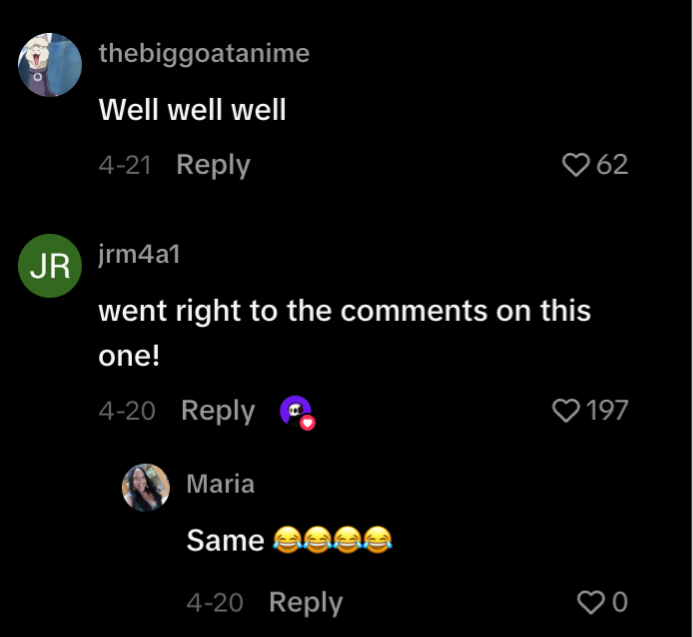
In highly engaged communities that quickly adopt new slang, coded hate speech can take hold more easily. In some cases, users are trying to bypass platform moderation rules. In others, harmful language is used under the guise of humor or irony.
TikTok’s algorithm also plays a key role in shaping exposure. Content is shown to narrow audiences based on shared interests and behavior. Over time, these groups develop their own language and references. For example, if a user engages with content that includes subtle antisemitic themes, the platform may continue to recommend similar content. This increases both exposure to and familiarity with harmful narratives.
To better understand this dynamic, we analyzed a small sample of TikTok videos and their comment sections to identify coded patterns.
How coded hate shows up in comments
- Leaving things unsaid: People hint at something without saying it directly, expecting others to fill in the meaning. For example, in a video where a creator talks about traveling to Iran and appreciating Iranian and Persian culture, a user commented, “If you’re wondering, yes he is.” The comment refers to the creator being Jewish in the context of the Iran Israel conflict, without using the words “Jew” or “Jewish.” The meaning is clear to those who recognize it, but not to everyone. Another example is a comment like “I think an artist in Germany tried that once,” which indirectly refers to Hitler and the Holocaust.
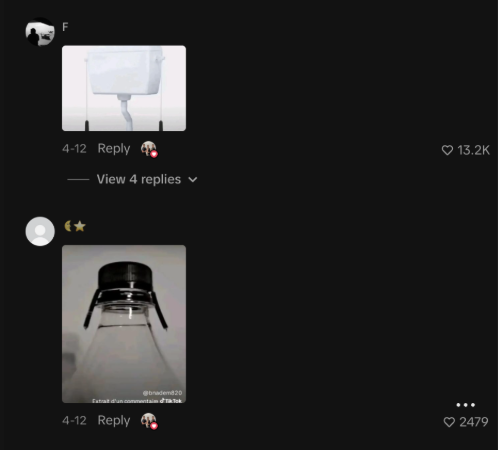
- Inside references and coded labels: In videos, including AI generated content and clips featuring Hasidic Jews, comments often refer to them as “Devs” or “Admins.” These labels draw from terms like “developer” and “administrator,” which are commonly used in tech to describe people who build and control systems. In this context, the terms are repurposed to echo conspiracy theories about control, using familiar language in a way that signals a very different meaning to those who recognize it. Examples include “source: devs,” “admin can you give me creative,” “admin party,” and “admin dancing with the level 1.” In other cases, users post images or stickers of random objects with added features that resemble side curls, referencing a visible feature of Orthodox Jewish communities.
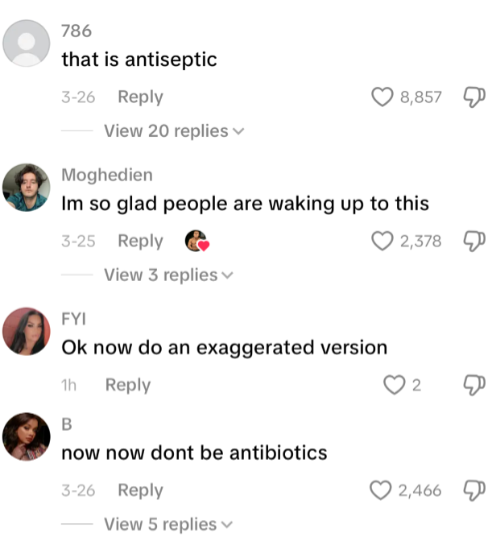
- Swapping words to avoid detection: People replace flagged words with similar sounding or harmless ones to get around moderation. Examples include “that is antiseptic,” “now don’t be antibiotics,” and “bro that’s antibiotic.”
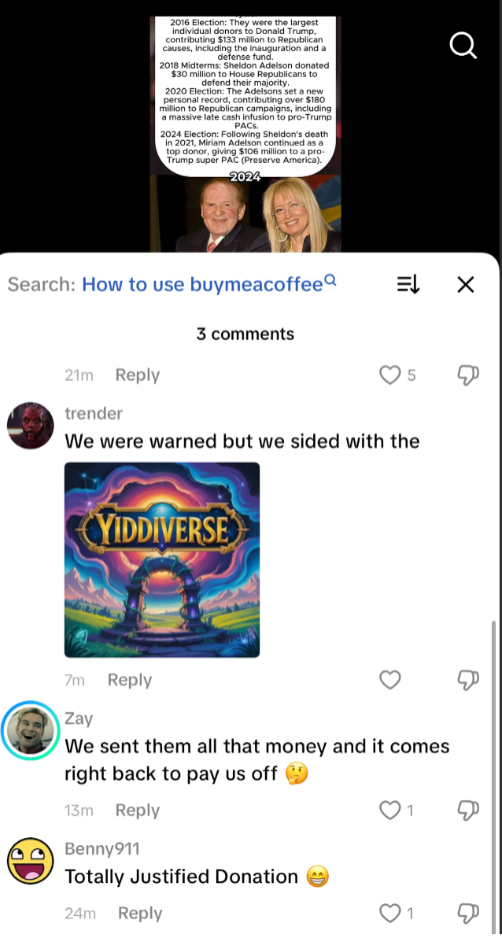
- Using coded abbreviations: Some acronyms carry hidden meanings that are understood within certain groups. For example, “TJD” has been used to mean “Total Jew Death,” while being disguised as “Totally Justified Donation,” under a video. These phrases appear harmless but carry very different meanings for those “in the know.”
In this article, we explored four common ways coded hate speech can appear in online conversations. These examples are not exhaustive, and they reflect patterns observed in a small sample rather than the full landscape. While this analysis focuses on TikTok, similar behaviors can be seen across other platforms where fast moving, community-driven language shapes how people communicate. As these patterns continue to evolve, further analysis will help build a more complete understanding of how coded hate adapts, spreads, and becomes normalized in different contexts.




Command Center Insights
How Ruhi Cenet’s Viral Hasidic Brooklyn Video Misled Viewers