One of the more notorious forms of antisemitism is conspiracies targeting the Holocaust. Holocaust distortion refers to any attempt to minimize the Nazi genocide of European Jews. In 2025, our data captured over 4 million posts on X featuring some form of Holocaust distortion, a 12% increase from the year before. That trend has carried into 2026, with Blue Square already recording over 1.15 million posts since January.
What goes into Holocaust Distortion?
Holocaust distortion is characterized by a “distortion of facts,” accepting that the Holocaust happened, but disputing the details. Posts might make a variety of conspiratorial claims that range from reducing the severity of the Holocaust to questioning the motives behind it. A dangerous aspect of Holocaust distortion is they manage to make it sound believable, stirring enough doubt in uninformed minds to make people also start questioning the severity and validity of the Holocaust.
Below are some examples of how Holocaust distortion may present itself.
Minimization: reduces the scale, severity, or uniqueness of the Holocaust. This includes disputing that six million Jews were murdered in the Holocaust without denying the Holocaust entirely, downplaying the systematic nature of the genocide, or framing it as one tragedy among many equivalent ones. A popular conspiracy is that Jewish people made up the death toll to gain sympathy, where it was not six million deaths but rather closer to 271,000. The claim comes from a Red Cross document that lists that number, though the document only gives deaths at some camps and doesn’t factor in those who died in Auschwitz or through non-camp deaths.

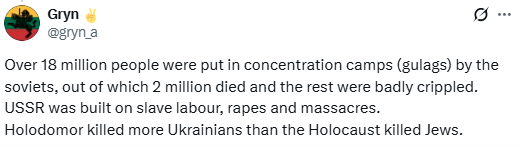
Relativization: points to other historical atrocities (Soviet gulags, colonial violence, etc.) not to honor those victims but to argue the Holocaust was not exceptional or that Nazi Germany was no worse than other regimes. Attempts to make the attempted extermination of the Jewish people seem equal to various other forms of persecution.
Misuse of memory: the instrumentalization of Holocaust imagery or language for unrelated political purposes. An example of misusing the memory of the Holocaust is trivializing comparisons (e.g., calling mask mandates the Holocaust, or comparing political opponents/law enforcement to Nazis).


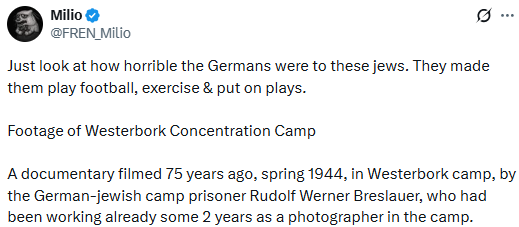
Questioning intent: This form of distortion accepts that Jews were killed but attributing it to chaos, disease, or wartime logistics rather than genocidal intent, undermining the definition of genocide itself. This also includes conspiracies that Nazi death camps did not exist, and were instead labor camps where the Jewish population was put to work rather than attempted to be exterminated. In the eyes of conspiracy theorists, deaths in these labor camps were not systematic but rather an unfortunate side-effect from the demand of wartime manufacturing.
Why Holocaust Distortion is Growing
There are a multitude of reasons why Holocaust distortion content continues to spread on social media. The October 7 Hamas attack and the subsequent war created a documented surge in antisemitic activity on social media, Holocaust distortion rising with it, embedding itself in Israel-Palestine debated. During this time, as social media became more ripe for antisemitic content, antisemites used military conflicts involving Israel as fuel to spread their conspiracies online.
At the same time, sweeping rollbacks in platform content moderation removed enforcement infrastructure that had previously limited the content’s reach. The dwindling generation of Holocaust survivors and veterans who witnessed the atrocities committed has eliminated the most powerful firsthand counter-voices, leaving the historical record more vulnerable to manipulation. The methods and language in which these ideas spread have become more sophisticated, moving away from blunt denial toward pseudo-scholarly distortion.
Lastly, generative AI has accelerated all of this by enabling the rapid production of polished, persuasive denial content at scale. The result is that what was once confined to fringe forums has migrated to mainstream feeds, normalized by algorithmic amplification and weak enforcement.
How to Recognize Holocaust Distortion
Recognizing Holocaust distortion is not complicated once you know what to look for. Any post that makes the Holocaust appear less severe than it was, makes excuses or attempts to rationalize the attempted genocide of the Jewish people, glorifies Hitler or the Nazi regime, or frames the genocide as a deserved or proportionate response to Jewish or Israeli actions is engaging in distortion. The common thread is an attempt to undercut the established historical record.
The most effective counter is straightforward education: correcting false claims with documented facts and directing people to credible organizations that preserve survivor testimony and historical evidence. If something doesn’t feel right online, it’s important to check with credible sources to get accurate information.