
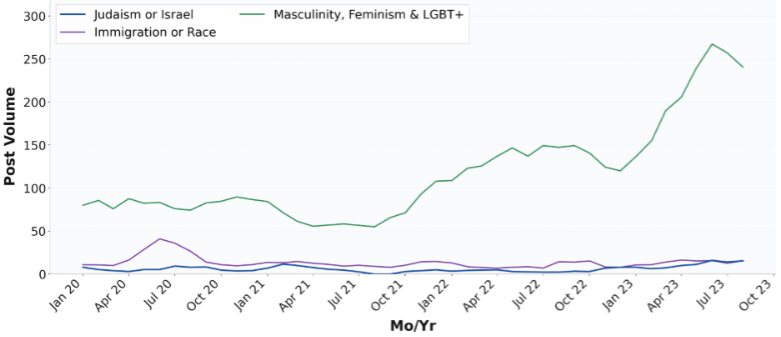
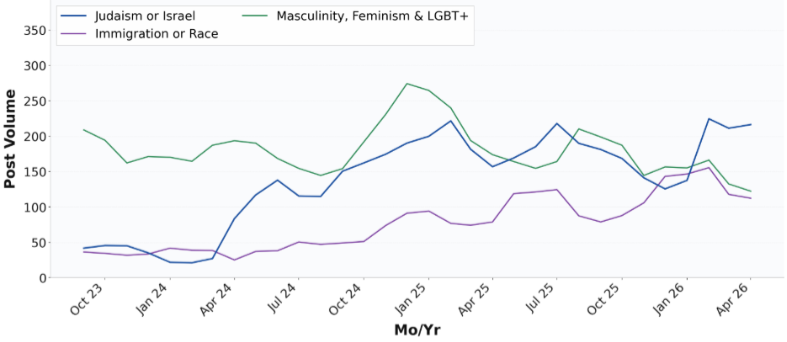
In our previous article on the manosphere, we documented how conversations among 10 prominent influencers within the movement increasingly shifted away from topics such as masculinity, feminism, and LGBTQ+ issues toward discussions involving Judaism, Zionism, and immigration after October 7, 2023.
Posts by 10 Prominent Manosphere Influencers Separated by Category, Pre-October 2023
Posts by Same 10 Manosphere Influencers Separated by Category, Post-October 2023
As conversations within these communities shifted, the language used within them evolved as well. Many of the terms examined in this article originated on 4chan and other extremist online communities before spreading to larger social media platforms, where they were often adopted by mainstream users and communities with different meanings and connotations. This evolution illustrates how antisemitic narratives can become embedded within meme culture, allowing users to express or circulate antisemitic ideas through slang, jokes, and memes that may obscure their underlying intent and facilitate wider dissemination online.
The “-maxx” Suffix
Within manosphere communities, the suffix “-maxx” generally means maximizing, increasing, or engaging heavily in whatever concept precedes it. Depending on the context, “–maxxing” can refer to improving a particular trait, adopting a specific lifestyle, or excessively engaging in a certain behavior. Common examples include “looksmaxxing” for improving physical appearance and “moneymaxxing” for pursuing financial success.
As Jewish and Israel-related discussions became more common in these communities, the suffix was adapted to create new terms tied to Jewish identities, stereotypes, and conspiracy narratives.
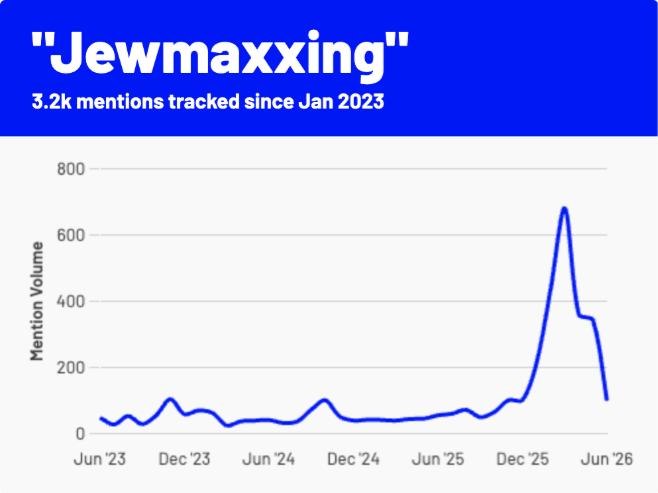
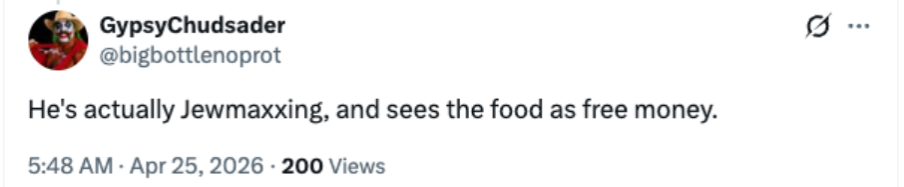
Jewmaxxing is often used in an antisemitic manner to describe someone supposedly maximizing or embodying stereotypical “Jewish” traits. Posts using the term frequently reference stereotypes involving money, greed, influence, or physical appearance.
The term has been adopted by some Jewish users in a positive or ironic way In these contexts, jewmaxxing refers to becoming more involved in Jewish life through religious observance, cultural participation, community events, or education. This dual usage highlights how some manosphere-derived terminology has been reinterpreted by the communities it originally targeted.

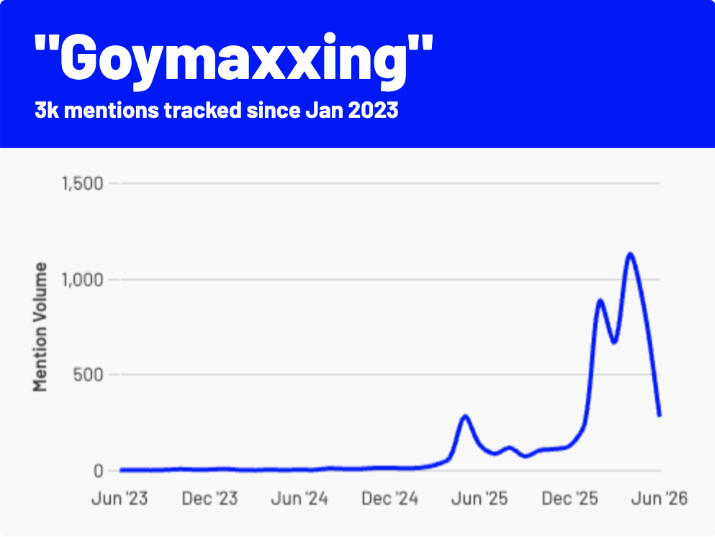
Goymaxxing is connected to the “goyslop” conspiracy theory, which claims that low-quality food, entertainment, and consumer products are intentionally promoted to keep non-Jewish people passive and easily influenced. The term is used to describe participation in behaviors associated with this idea, including consuming ultra-processed food, gambling, engaging with mainstream entertainment, and excessive social media use.
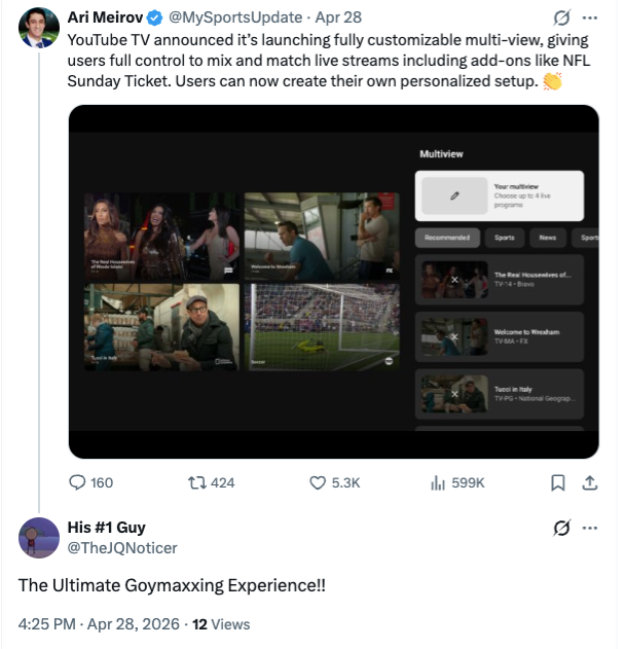
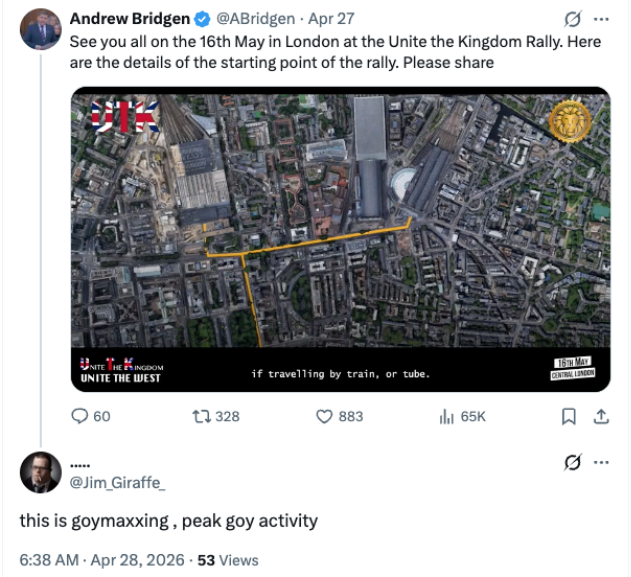
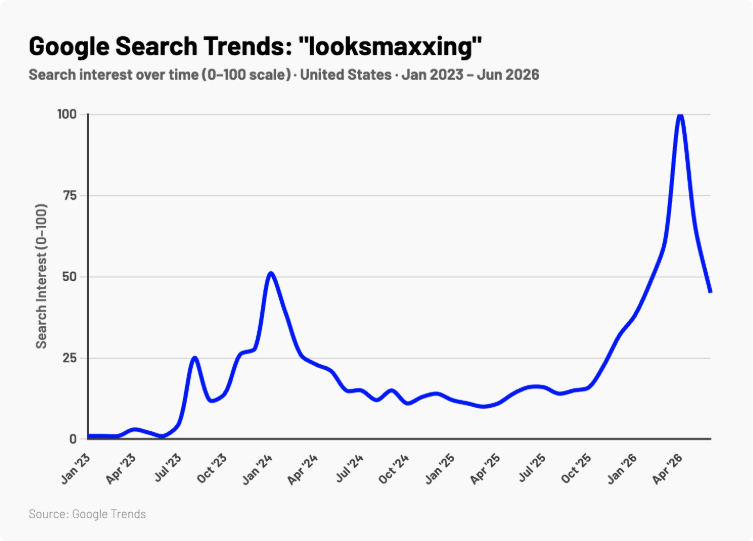
The growth of jewmaxxing and goymaxxing also coincides with a broader increase in the popularity of “-maxxing” language online. Search interest in “looksmaxxing,” the most widely recognized example of the suffix, follows a similar pattern and experienced major growth during the same period. This suggests that some of the growth in Jewish-related “-maxxing” terms may be tied to the increasing use of the suffix itself across the internet.
The “-pilled” Suffix
The “-pill” suffix originates from the concept of the “red pill,” popularized by The Matrix. Online communities use the suffix “-pilled” to indicate that someone has adopted a particular worldview or believes they have become aware of a hidden truth.
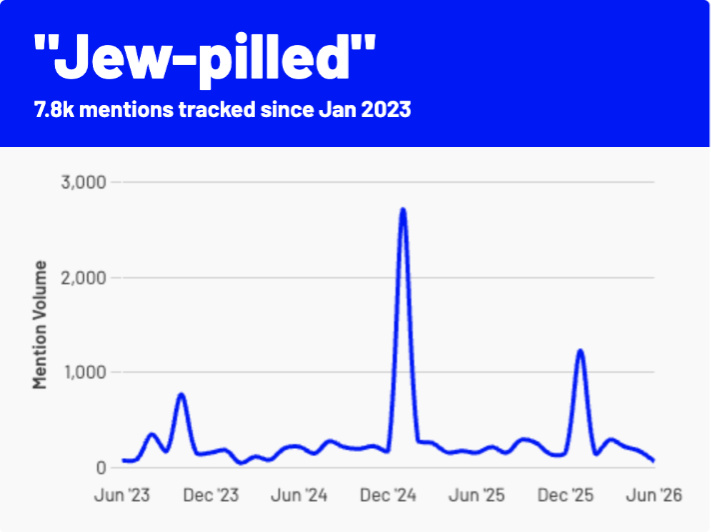
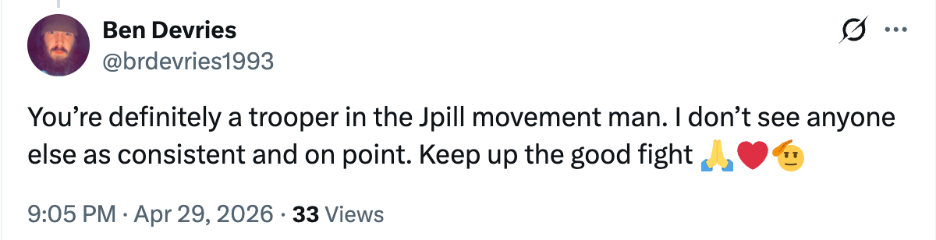
In extremist spaces, “j-pilled” or “jew-pilled” describes someone who has adopted conspiratorial beliefs regarding Jewish influence over media, finance, politics, or other institutions.
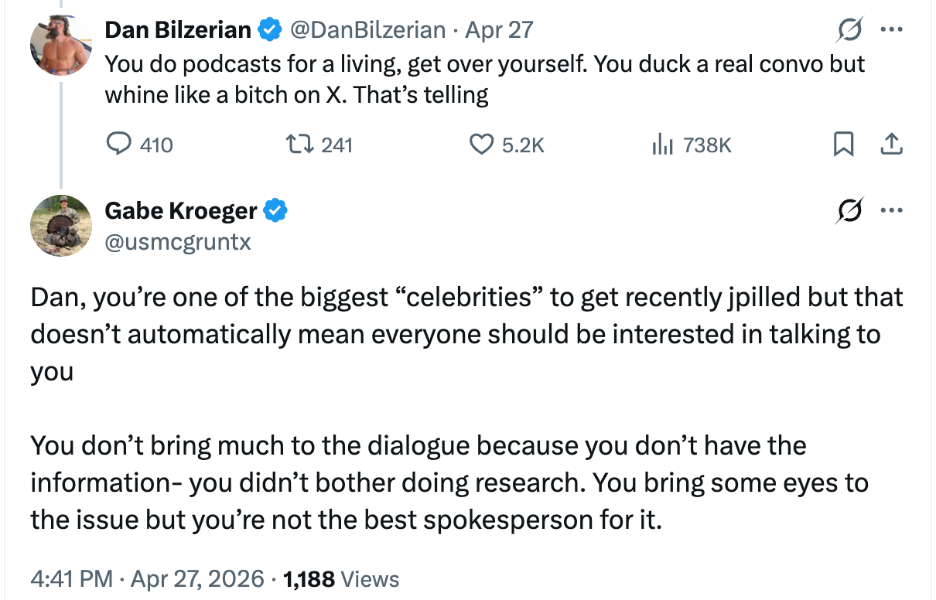
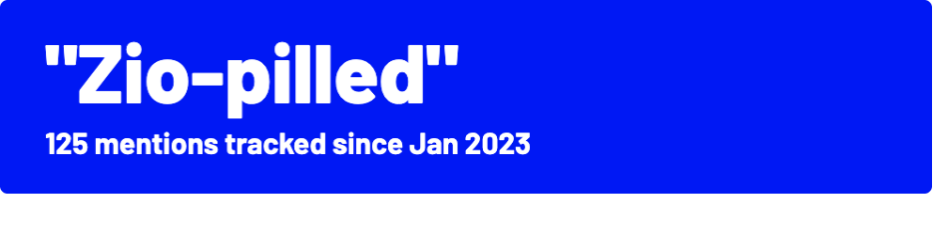
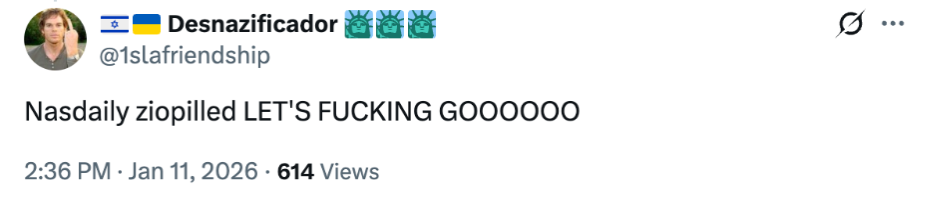
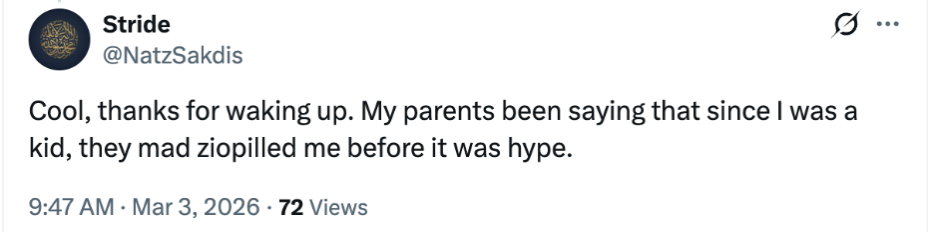
“Zio-pilled” is used in multiple and often contradictory ways.
In anti-Zionist spaces, the term can describe someone who has embraced Zionist beliefs or “fallen for” Zionist ideology. In other cases, it is used to describe someone who has become convinced that Zionism is dangerous or harmful.
Some Zionist communities have adopted the term positively or ironically to describe support for Zionism or Israel. As with jewmaxxing, the meaning often depends on the surrounding context and community using it.
The “–cel” Suffix
The suffix “–cel” derives from “incel,” short for involuntary celibate. Online users frequently attach the suffix to descriptors, creating labels for people associated with identities, behaviors, or beliefs.
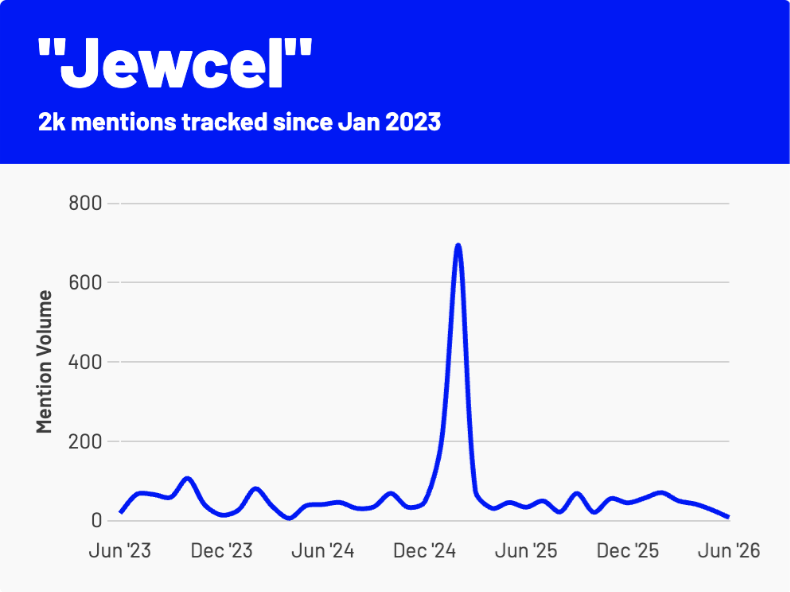
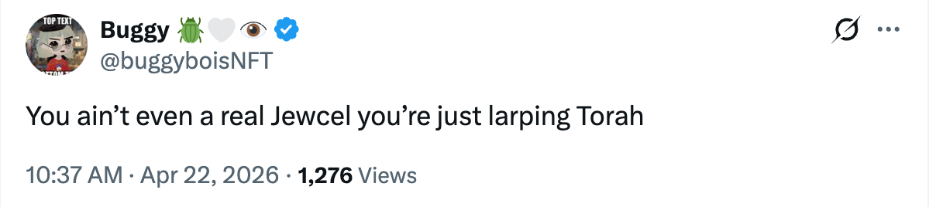
Jewcel is a derogatory term for a Jewish person. While the term is less common than other Jewish-adapted manosphere slang, it follows a familiar naming convention found across incel communities.
Goycel generally refers to a non-Jewish person and is often associated with users who engage in behaviors described as “goymaxxing.” The term is commonly found in communities that contrast perceived Jewish and non-Jewish behavior through conspiratorial narratives.

Gendered Slang Targeting Zionist or Jewish Women
Some newer terms combine anti-Zionist rhetoric with gendered insults. The following terms are not directly derived from manosphere or incel terminology. However, they illustrate a similar overlap between antisemitic or anti-Zionist rhetoric and misogynistic language, making them relevant to the themes discussed earlier. Unlike the earlier expressions, these terms are directed specifically at women.
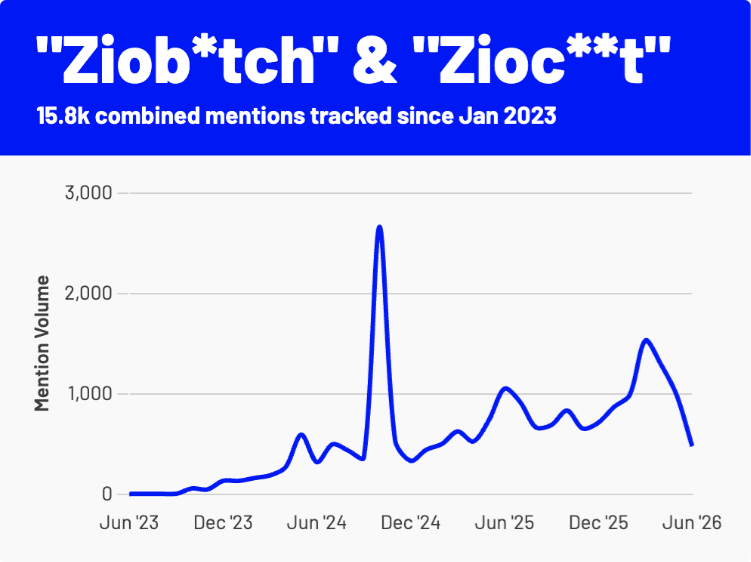
Ziob*tch and zioc**t are derogatory terms directed at Zionist or Jewish women. The terms began appearing frequently in October 2024 and have maintained sustained usage since then.
While many of the adapted terms in this article remain concentrated in fringe online spaces, some have spread more widely across social media platforms. Tracking these terms provides insight into how extremist language evolves, how communities borrow from one another, and how antisemitic, anti-Zionist, and misogynistic narratives increasingly intersect in online discourse. These terms demonstrate that the shift toward Jewish and Israel-related discourse was not limited to discussion topics, as discussed in our first manosphere article. It also influenced the language and identity markers used within these communities.
The growth of this vocabulary is another example of the memeification of antisemitism. Antisemitic ideas are increasingly being expressed through slang, jokes, memes, and other forms of online culture. This can make hateful content appear humorous or ironic, helping it spread more easily and making it less recognizable to those unfamiliar with the language.



Command Center Insights
How the Internet Reacted to the Cost of Jewish Security