
The 2026 primary election season featured multiple congressional candidates accused of antisemitic rhetoric on ballots from both major political parties. Serious contenders across the country drew substantial support despite using antisemitic slang like “goyslop” or claiming that “the Zionists own our media, our banks, and all of our politicians.” Although these particular candidates did not win their primary races, these remarks were not immediate disqualifiers for a substantial share of voters.
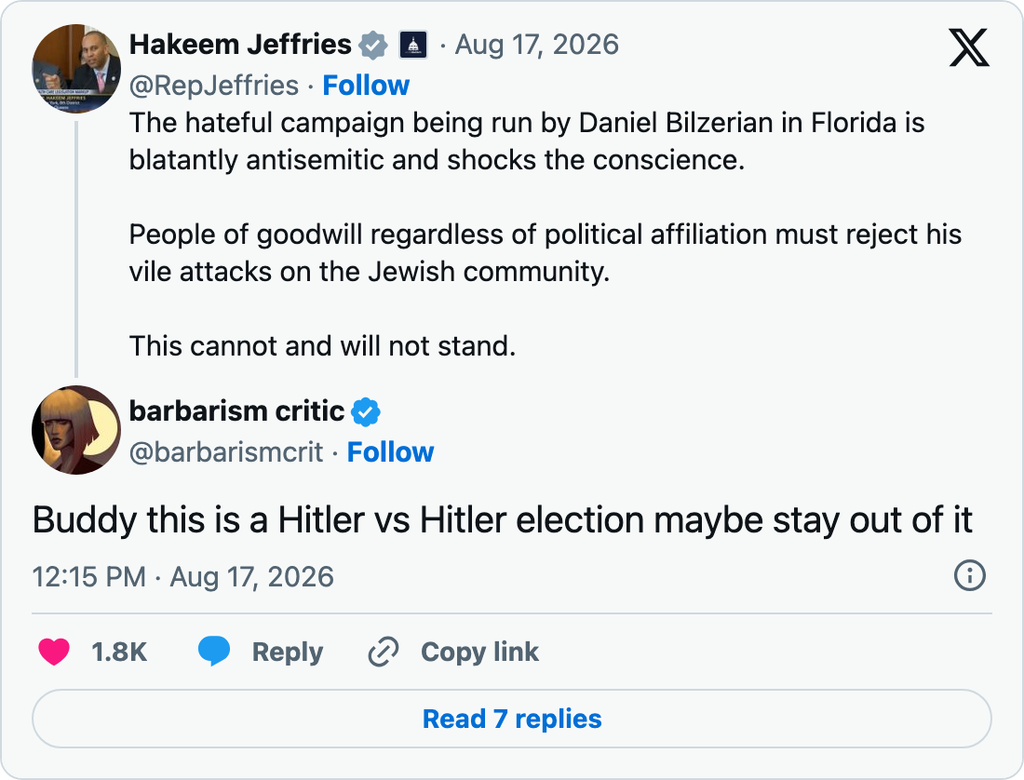
The most explicitly antisemitic statements this season came from Dan Bilzerian, a social media influencer turned candidate for Florida’s 6th District. Members of Congress from both sides of the political aisle disavowed Bilzerian’s campaign and his blatantly antisemitic language. Blue Square Alliance’s Command Center analyzed the seven public statements made by members of Congress who condemned Bilzerian’s antisemitic statements online. Among the 1,175 available replies, almost none supported the elected officials’ condemnations. Most replies targeted the officials themselves, including antisemitic conspiracies or claims that their condemnations were due to financial influence from Israel or the American Israel Public Affairs Committee (AIPAC).
Who is Dan Bilzerian?
Before entering politics, Bilzerian was best known as a poker player and right-wing social media personality who amassed millions of followers on X and Instagram. In recent years, his content has turned toward attacks on Israel and Jews. He has also propagated antisemitic conspiracy theories in media appearances. For example, in a 2024 interview for the YouTube show “Piers Morgan Uncensored,” he said that Judaism promotes “Jewish supremacy” and that fewer than six million Jews died during the Holocaust.
Dan Bilzerian’s Antisemitic Rhetoric During the 2026 Primary
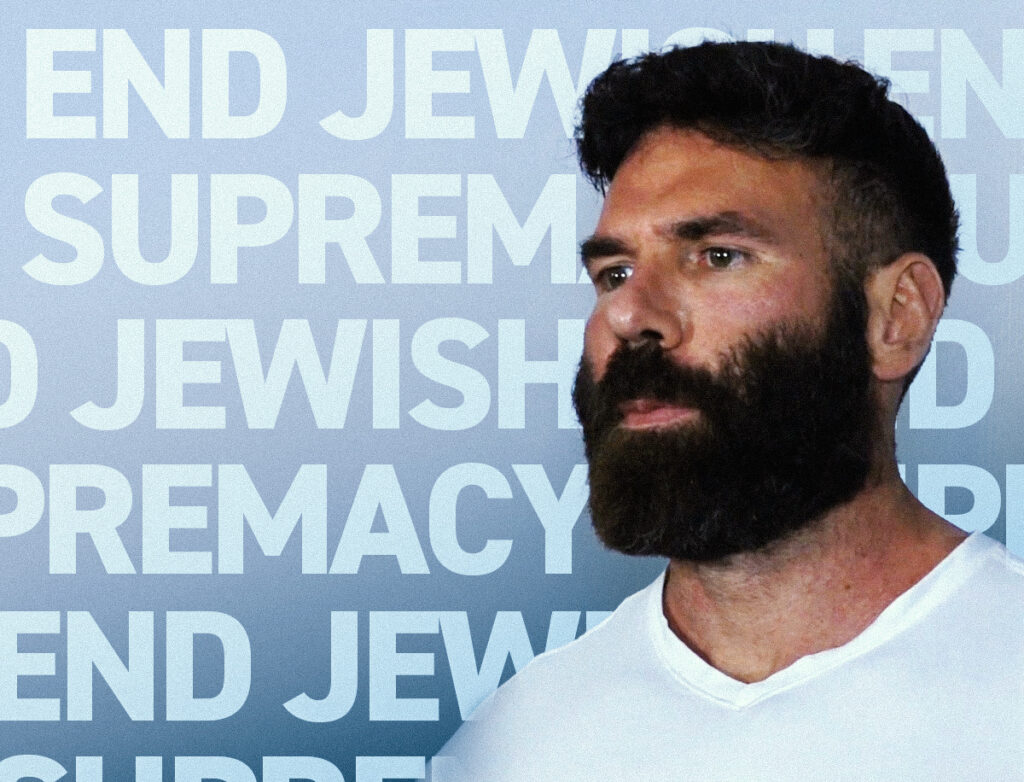
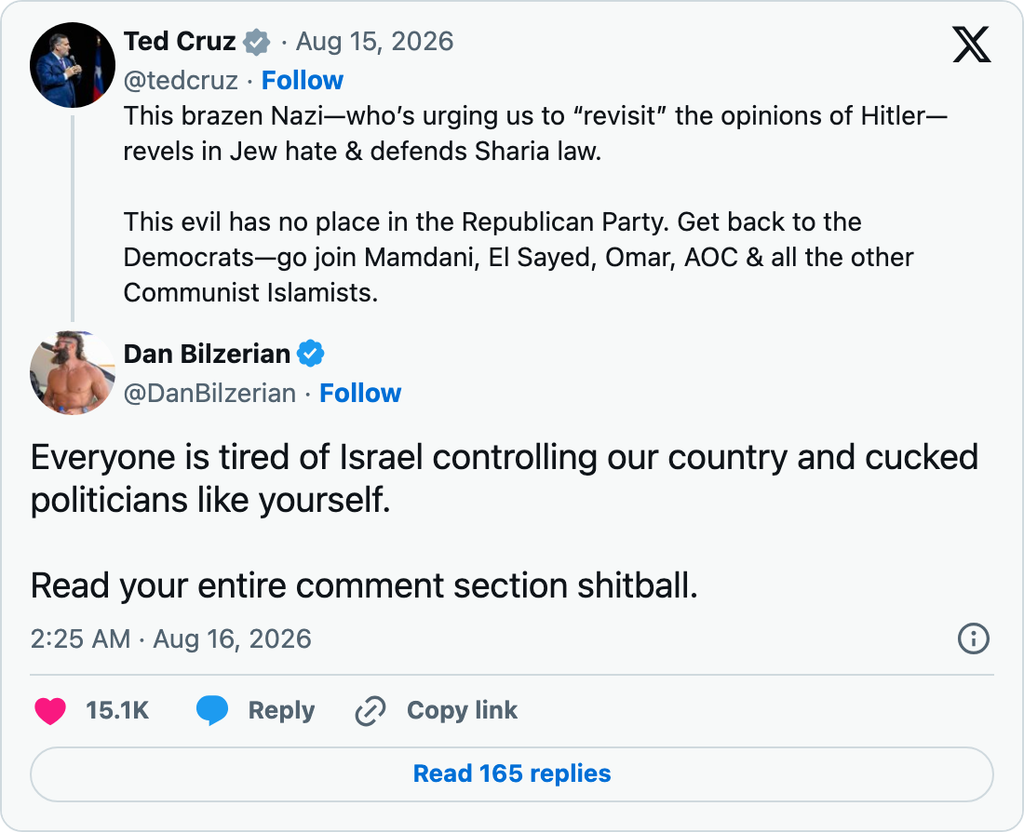
Of the congressional candidates who publicly made antisemitic comments during the primary election cycle, Bilzerian stood out because of the frequency and degree of hatefulness in his statements, going so far as to list “End Jewish Supremacy” as a campaign platform tenet.

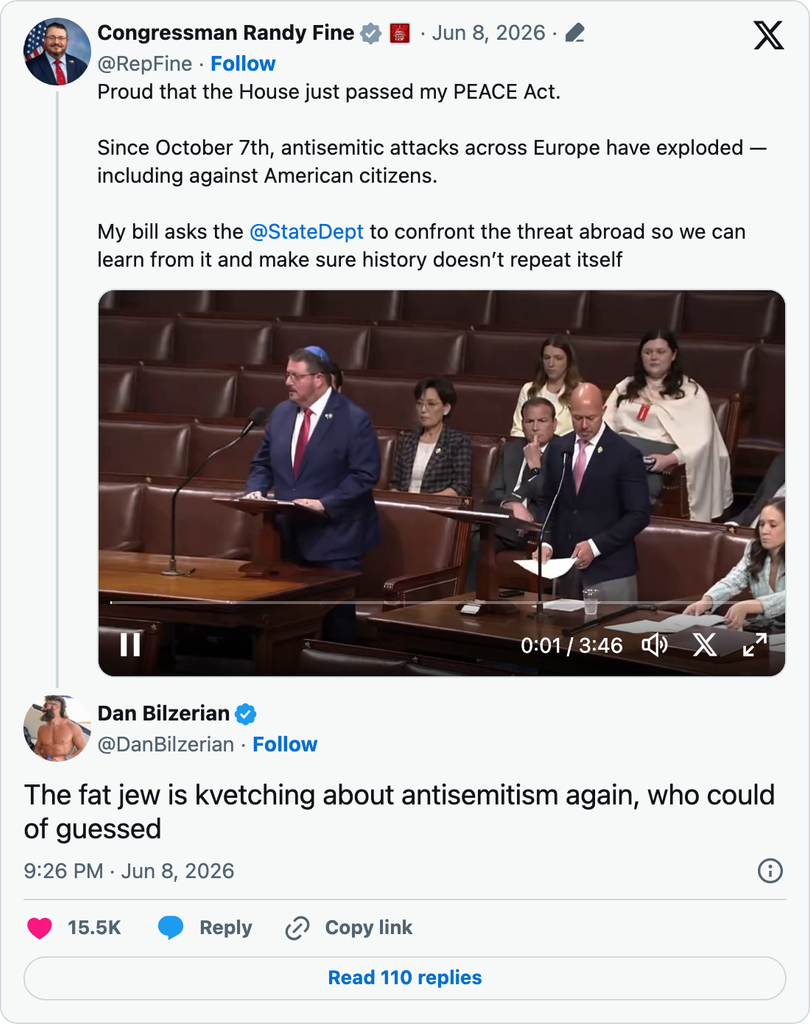
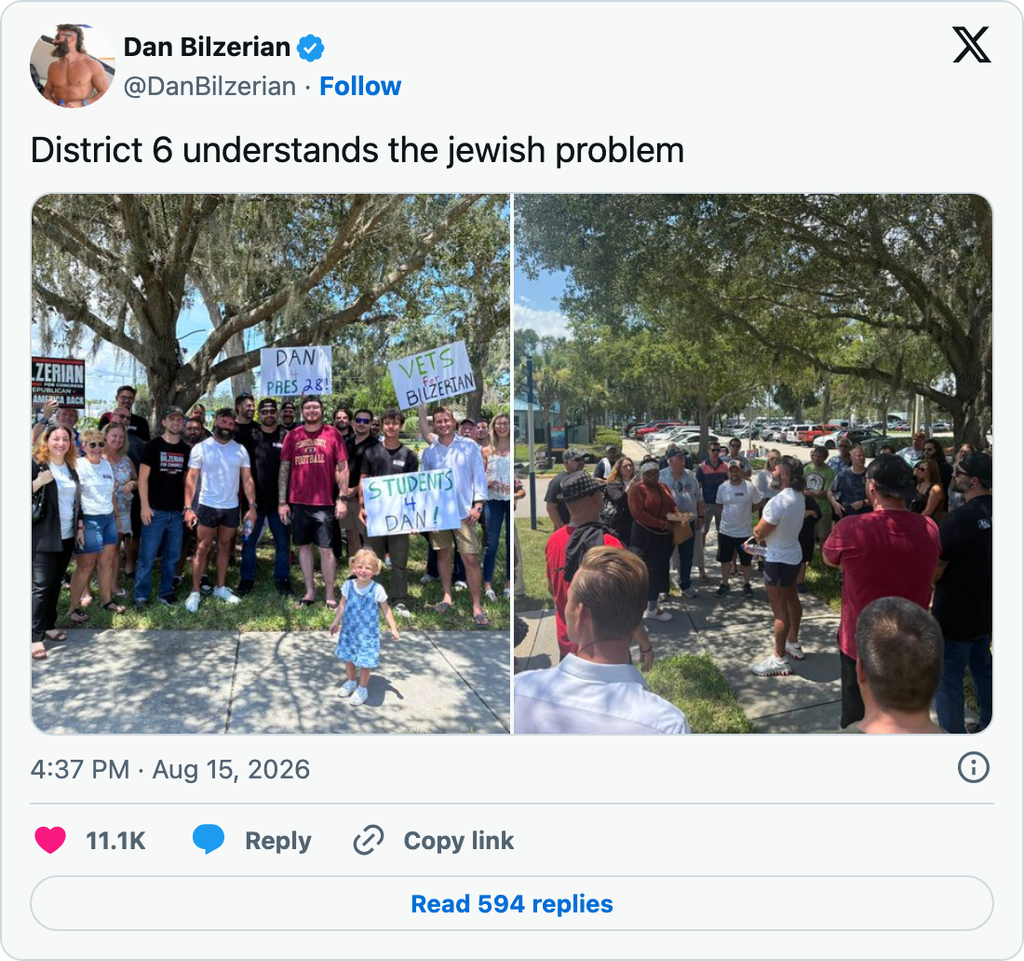
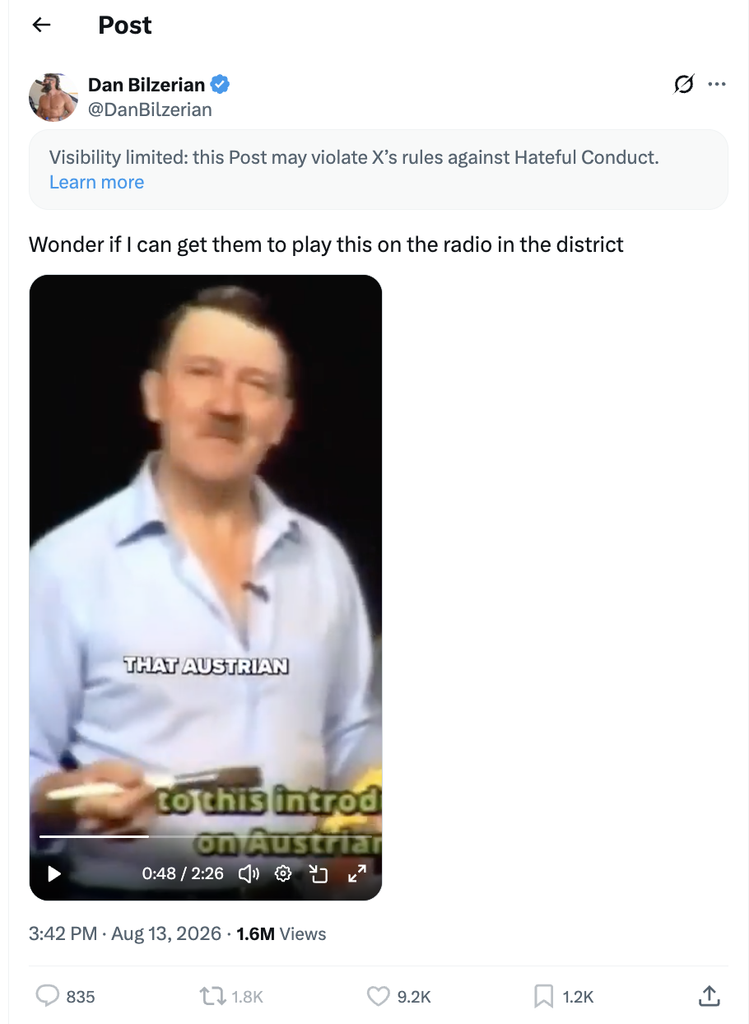
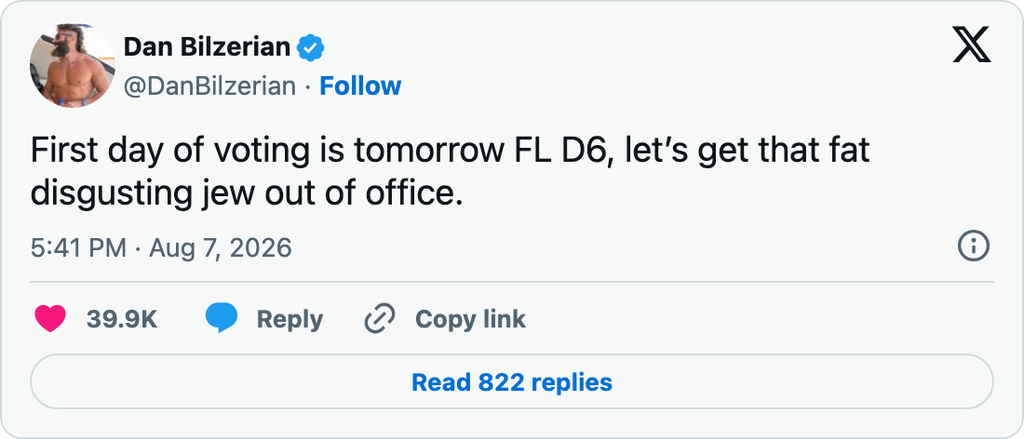
He also repeatedly called his incumbent opponent Representative Randy Fine a “fat Jew,” posted that “District 6 understands the Jewish problem,” and released an ad which featured an AI-generated Hitler image while asking viewers, “Should we revisit that Austrian painter’s opinions?”
How We Analyzed Replies to Congressional Condemnations
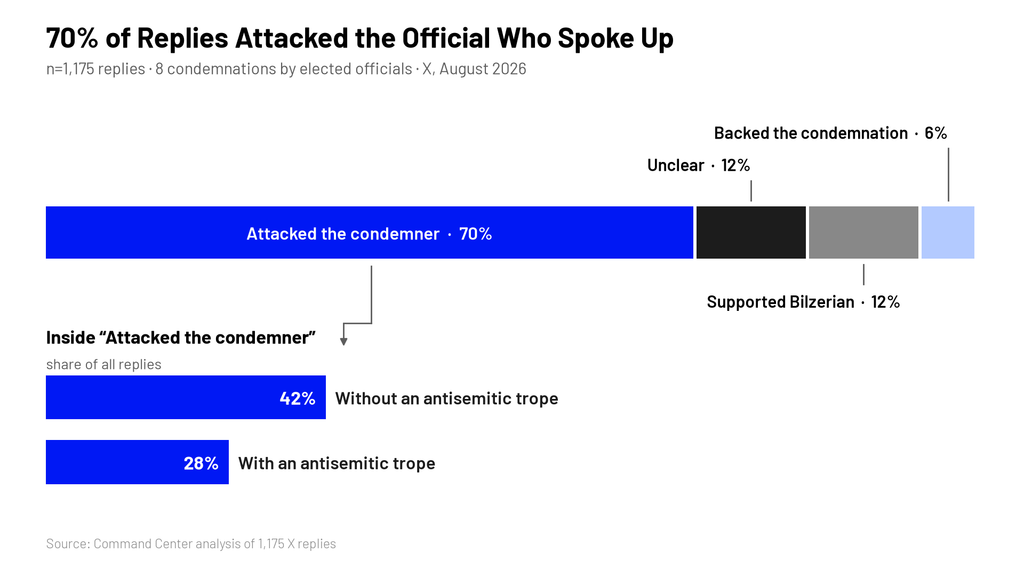
The Command Center used Anthropic’s Claude Sonnet to classify online replies (n=1,175) to the seven elected officials who publicly condemned Bilzerian’s antisemitism on X. The model grouped replies by whether they agreed with the post’s sentiment, defended Bilzerian, or attacked the official who condemned him, either with or without employing an antisemitic trope in their attack.
The comment sections did not spark productive dialogue. The most common response was hostility towards the elected official who had posted the condemnation (70 percent). Most of those replies did not invoke an antisemitic trope, but called the official a hypocrite, a fraud, or a coward. However, just over one in four (28 percent) attacked the official using an antisemitic trope.
Most Replies Attacked Officials Who Condemned Bilzerian
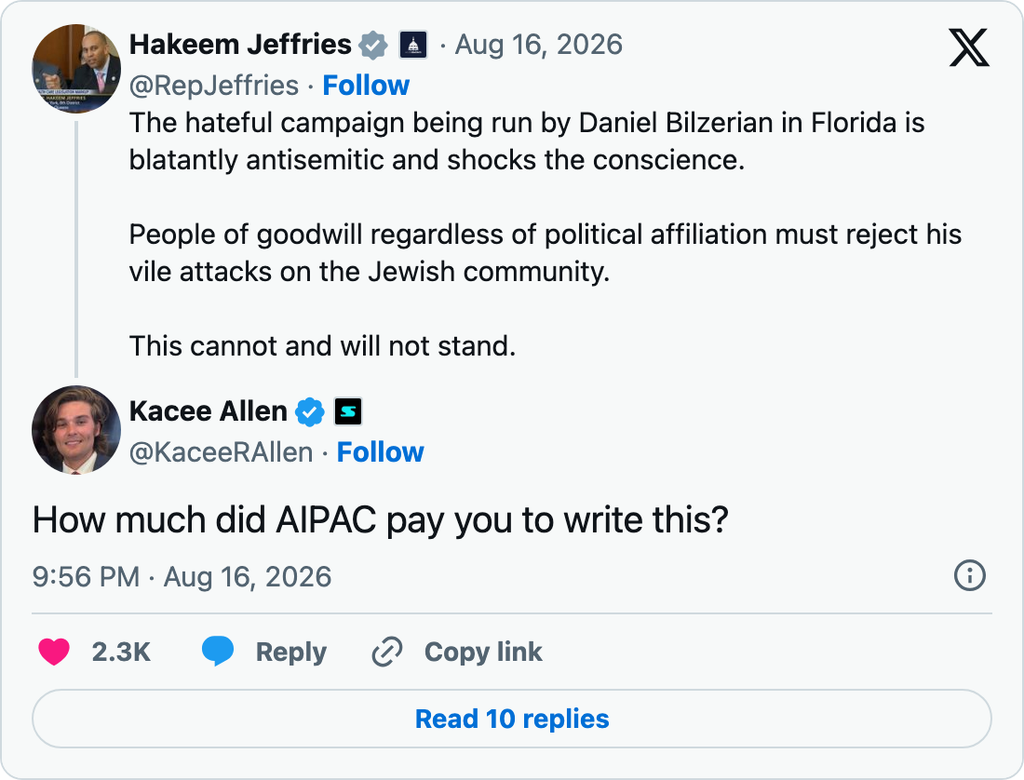
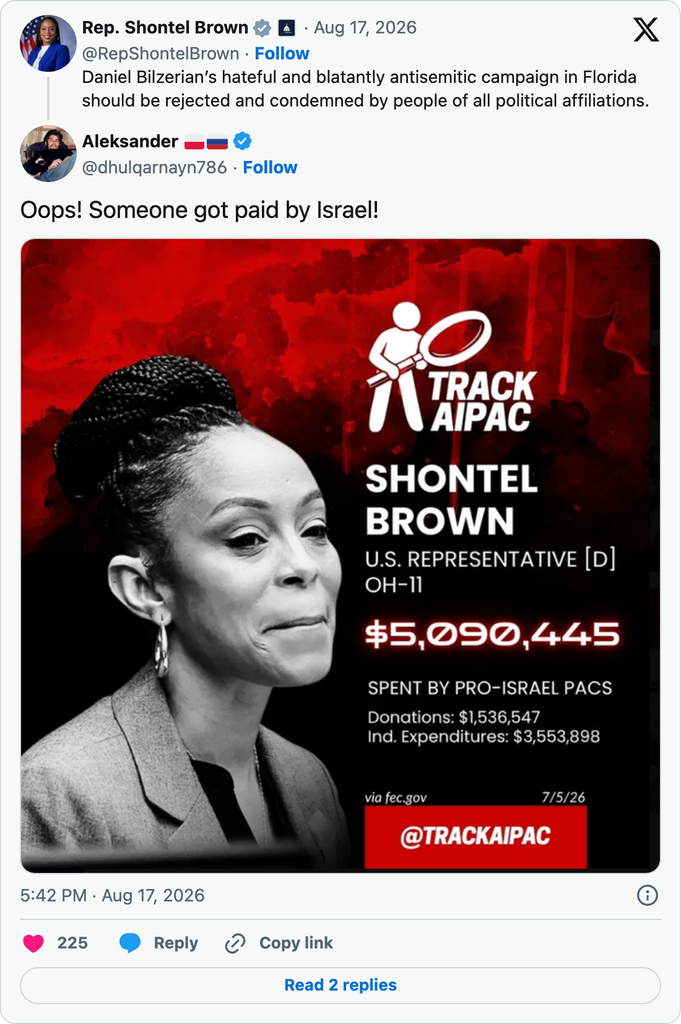
Among the replies that used an antisemitic trope, one accusation dominated: that the reason those elected officials publicly condemned Bilzerian’s antisemitism was because they had been paid off by Israel or AIPAC. The accusation was levied regardless of elected officials’ political parties and personal religious and ethnic backgrounds.
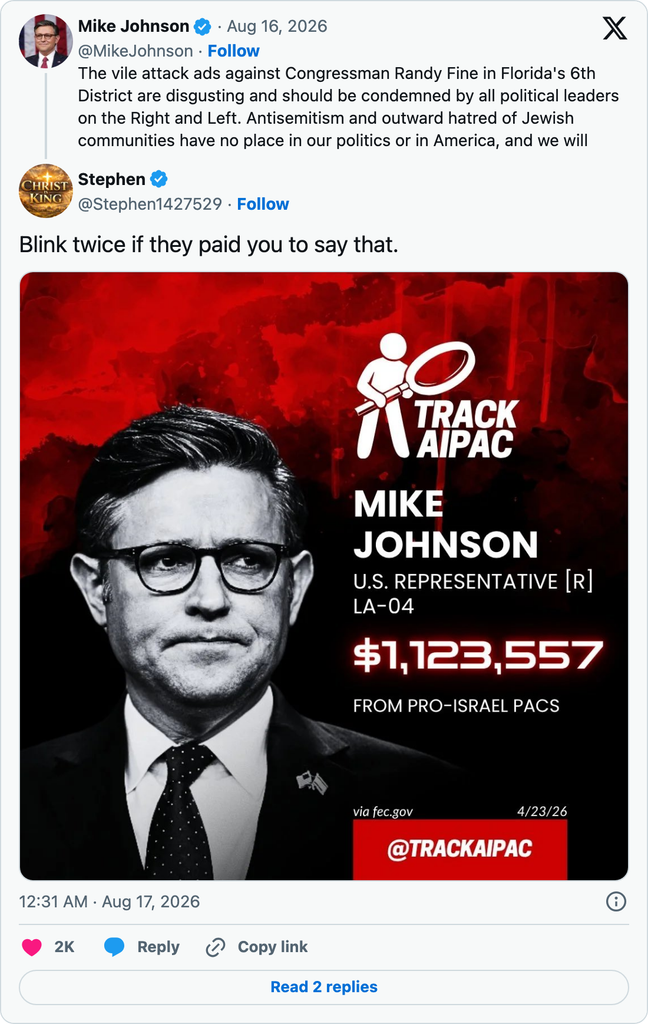
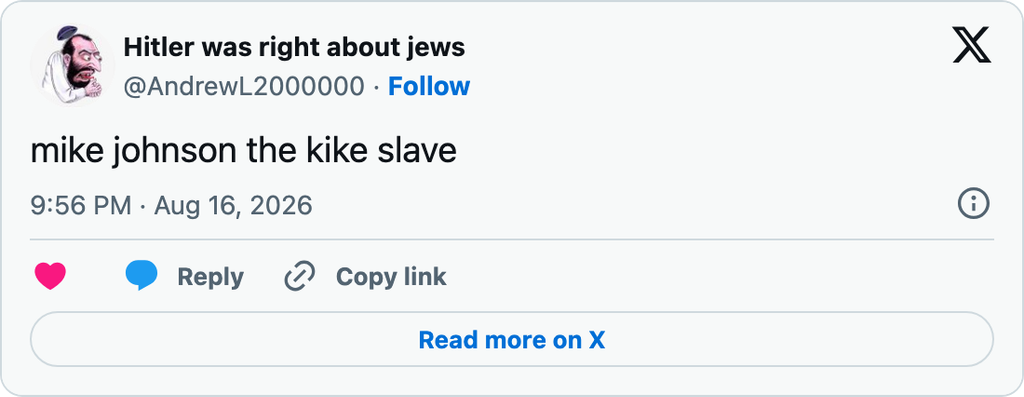
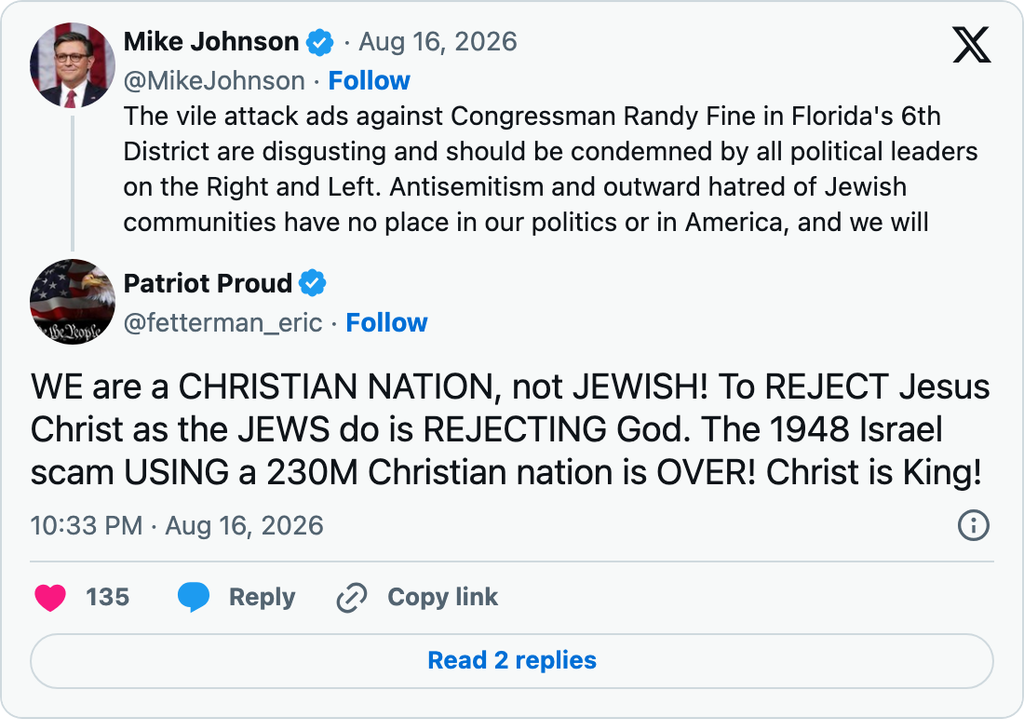
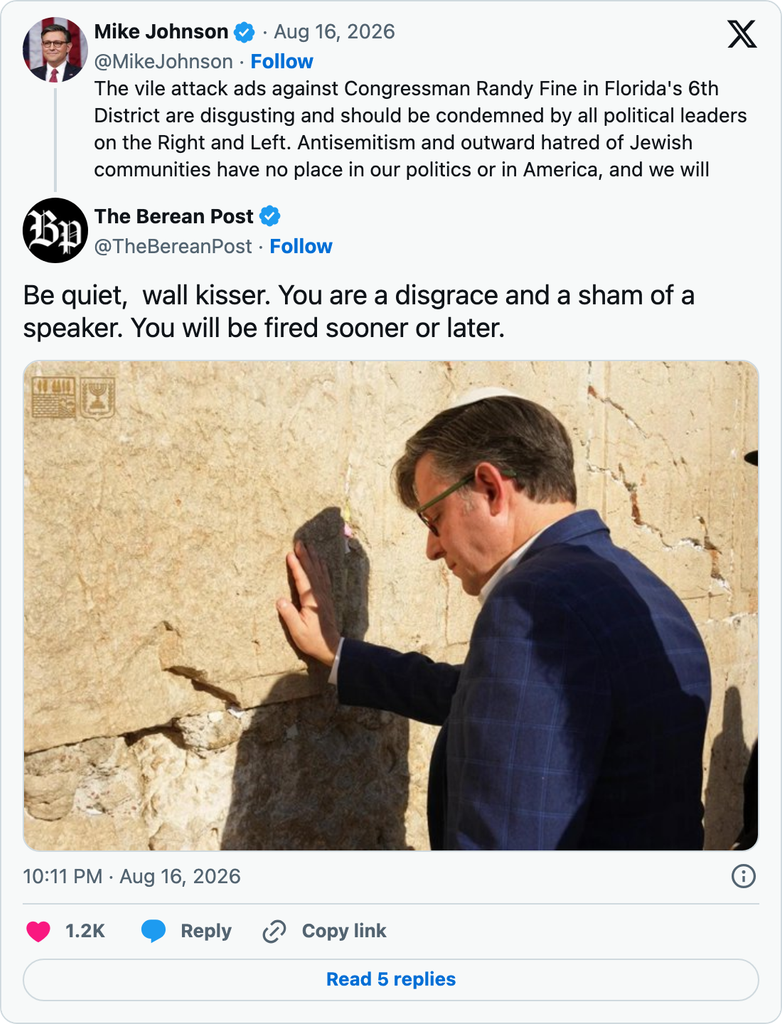
House Speaker Mike Johnson (LA-4) spent the days after his own post being told that he served a foreign country and that he was insufficiently Christian in replies that called him a “k*ke slave” and told him, “WE are a CHRISTIAN NATION, not JEWISH.”
One reply mocking him for having visited the Western Wall was viewed over 10,000 times and drew over a thousand likes.
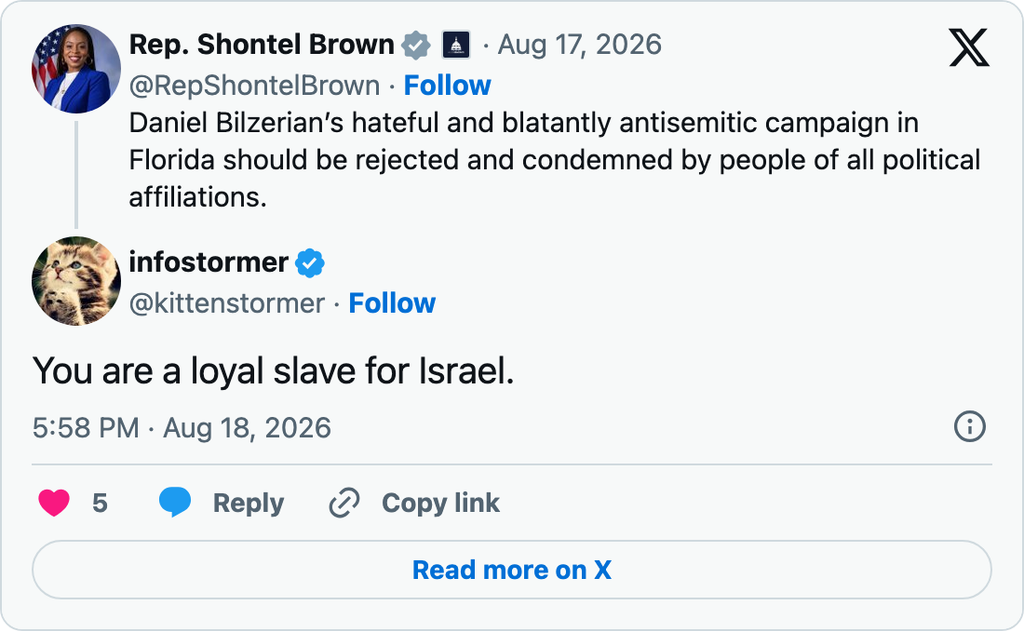
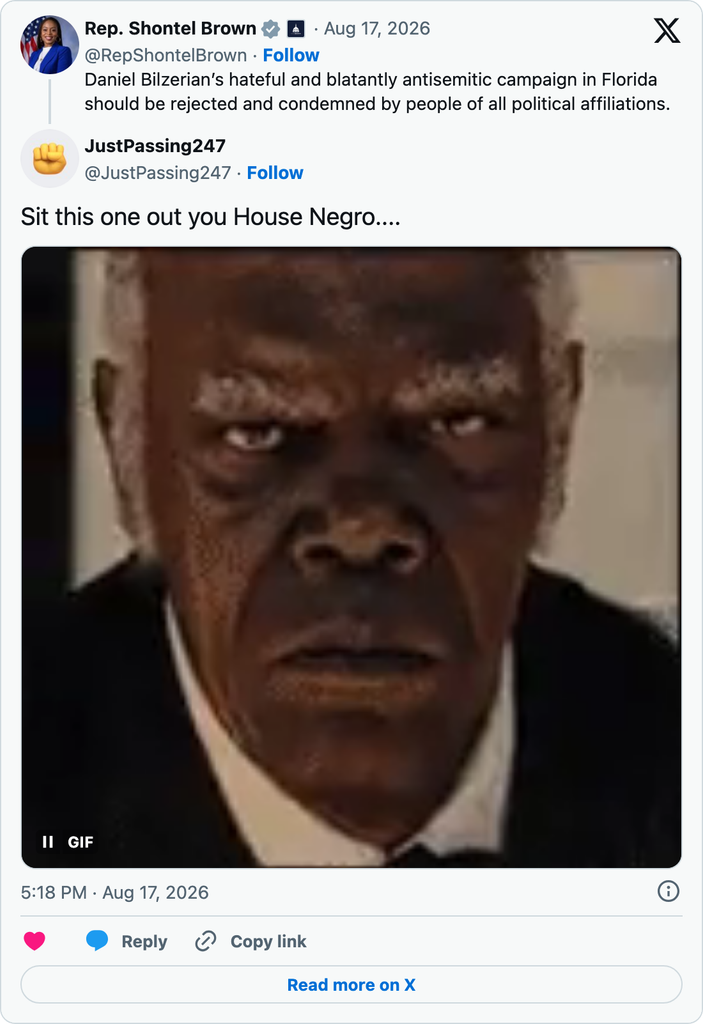
Representative Shontel Brown (OH-11) was subjected to similar treatment in response to her own statement online. Replies called her “a loyal slave for Israel,” said Israel had paid her, and answered her post about antisemitism with racial slurs aimed at her.
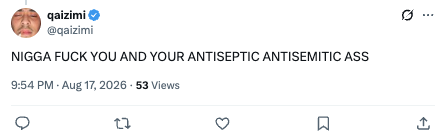
Condemning Dan Bilzerian’s Antisemitism Invited More Hate
Bilzerian did not win his primary election yet garnered considerable support. While the standard institutional response to call out bigotry succeeded in keeping a blatant antisemite out of office, the comment sections of those calling out Bilzerian became a gathering place for his supporters to spread hate. Their antisemitic framing proved common, portable, and largely indifferent to who the target was. It attached to Republicans and Democrats, Jews and non-Jews, and often reduced the same accusation that calling out antisemitism reveals hidden allegiance: bought by Israel, owned by AIPAC, and serving someone else.
These replies raise the concern that public hostility could discourage allies from speaking up, particularly when doing so invites personal attacks or accusations of hidden motives. When condemning hate makes someone a target of it, the risk extends beyond immediate abuse, as others may hesitate to lend their voices. The kind of rhetoric described in this article can also have violent consequences, as demonstrated by several incidents over the past few years in which law enforcement prevented attacks on AIPAC-linked targets.
Disclaimer: As a 501(c)(3) nonprofit organization, the Blue Square Alliance takes no position on behalf of or in opposition to any candidate for elected office. This analysis examines antisemitic rhetoric and online reactions to it, and is not intended to support or oppose any campaign.


Command Center Insights
How Ruhi Cenet’s Viral Hasidic Brooklyn Video Misled Viewers