

Austin Franco, an undergraduate student at Cornell University, first drew widespread attention in June when he responded to a prospective employer by saying that he was “not interested in working for a Jew.” After the exchange was shared publicly, the incident drew critical coverage from multiple news outlets. The media attention was followed by a GiveSendGo fundraiser created on his behalf by a far-right influencer and an appearance on Piers Morgan’s talk show, extending the incident from a private exchange into a sustained online controversy.
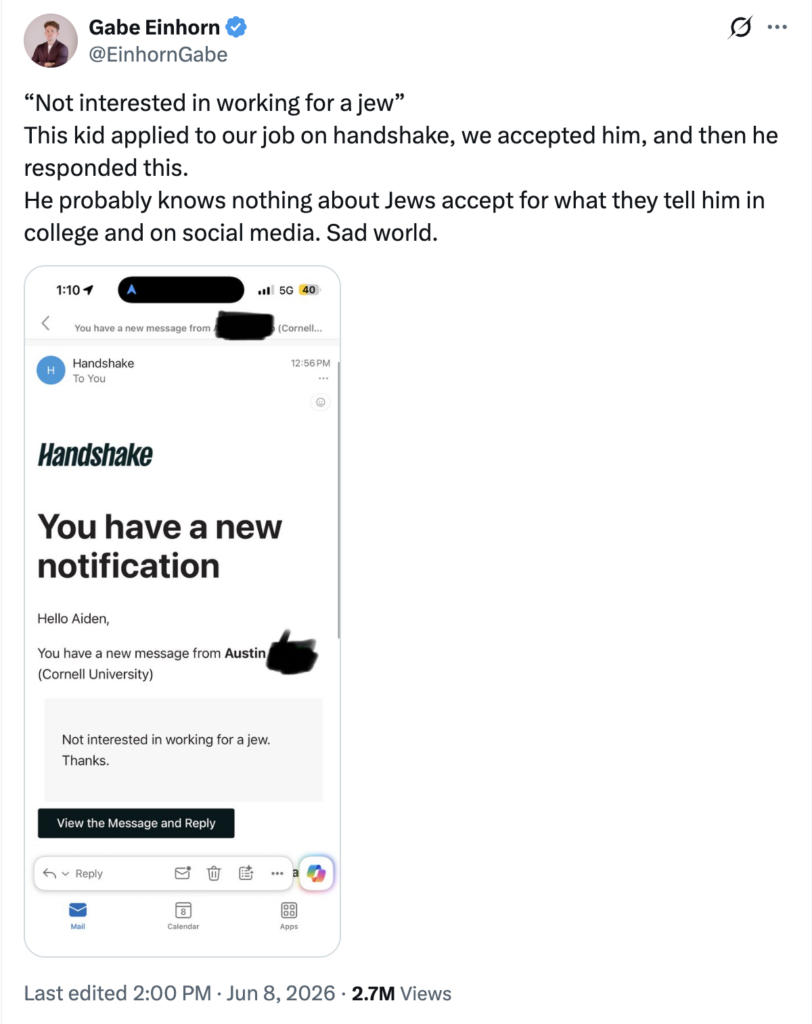
Blue Square Alliance Against Hate’s Command Center collected nearly 4,000 comments left under ten high-reach posts which discussed Franco that have a combined view-count of over 11 million across X (Twitter), Instagram, and TikTok.
The original ten posts were divided into three categories by BSA analysts based on how they presented the incident. They either supported Franco, condemned Franco, or discussed the case neutrally. Claude Sonnet was then used to classify each comment according to its stance as supportive of Franco, unsupportive of Franco, or neutral, based on the comment’s context.
The results varied by post category, but Franco’s supporters dominated each one.
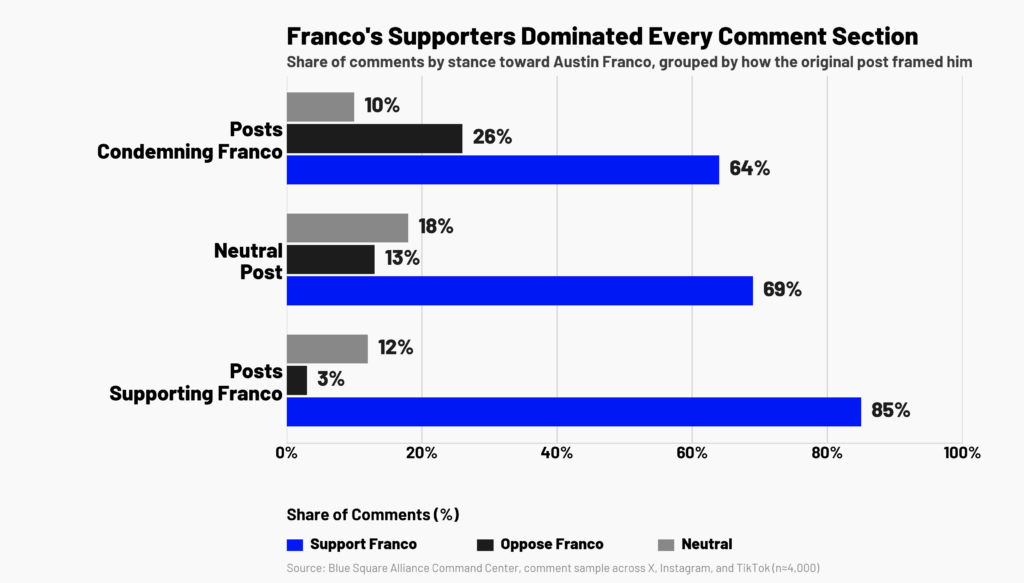
Support for Franco was strongest under posts that already framed him favorably but even posts explicitly condemning him still drew mostly supportive replies instead. Opposition to Franco never rose above about a quarter of comments in any category, and neutral comments made up a modest share throughout, often reflecting conspiratorial framing of the incident rather than a clear stance on Franco himself.
Engagement patterns reinforced the dominance of Franco’s supporters. Condemnatory comments received a smaller share of likes than their share of comment volume proportionally in every category. The disparity was most pronounced beneath posts condemning Franco, where condemnatory comments accounted for more than a quarter of replies but received only about 11 percent of likes.
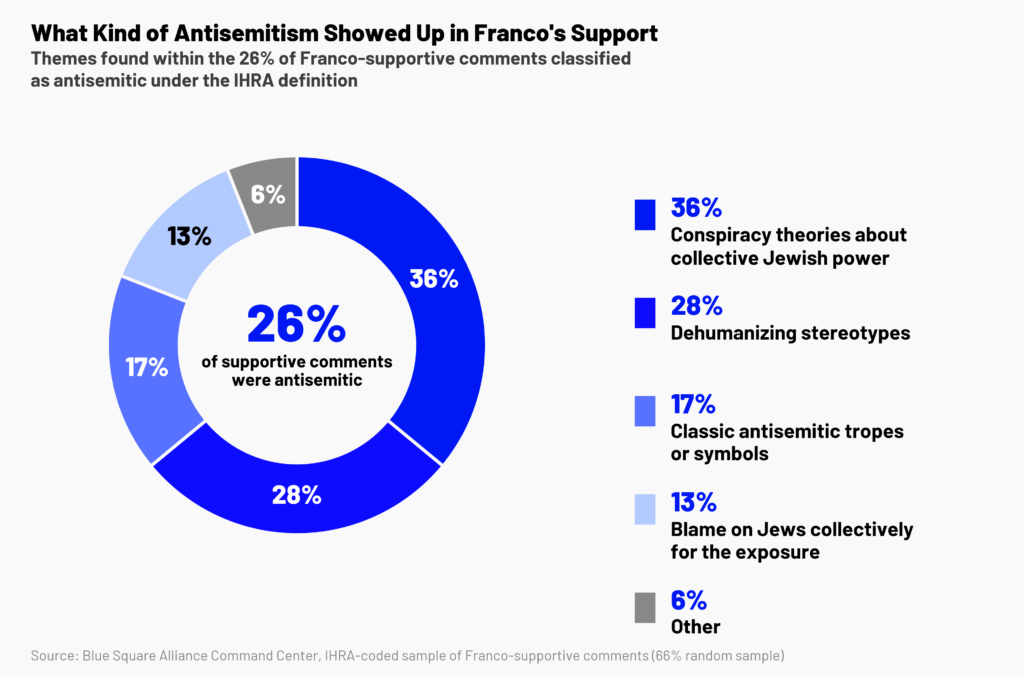
To distinguish general support for Franco from antisemitism itself, BSA analyzed a random 66 percent sample of comments supporting Franco a second time using the IHRA definition of antisemitism.
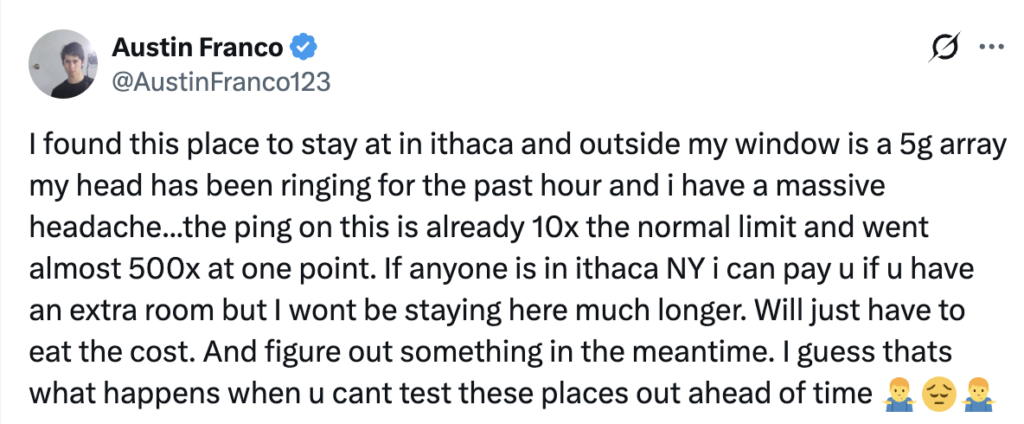
Franco’s more recent posts on X point to a highly conspiratorial worldview, demonstrating that his controversial opinions extend beyond the original viral exchange.
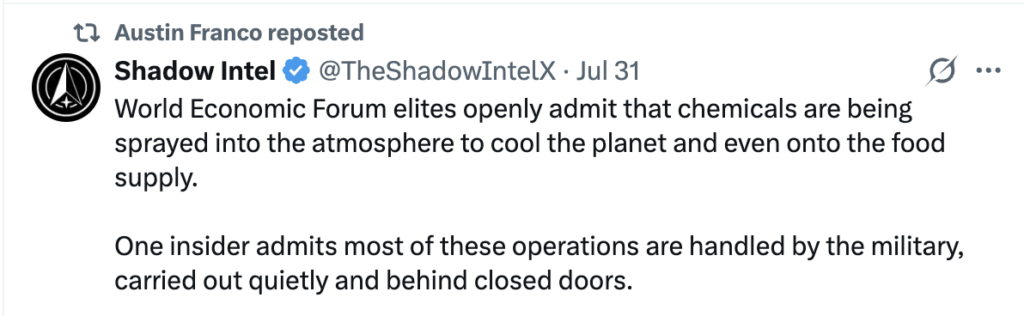
That pattern also appears in his most recent Substack article, where he portrays an “international banking cartel” as a hidden, parasitic force controlling markets, government, and economic crises.
The response to Franco is therefore not solely a story about one antisemitic message. It also shows how online controversy can provide publicity, financial support, and an ideological audience to someone who was initially the subject of deserved condemnation. Although the sampled comments should not be treated as indicative of broader public opinion, they demonstrate how Franco’s defenders greatly outnumbered his critics in online spaces where the story, and especially Franco’s perspective, circulated widely.



Command Center Insights
How Ruhi Cenet’s Viral Hasidic Brooklyn Video Misled Viewers