On September 25, film production company A24 released the movie Primetime, a dramatized portrayal about the life and work of Chris Hansen, host of the mid-2000s reality television show To Catch a Predator. The show was controversial for its sting operations targeting would-be child predators. Critics characterized the show as vigilantism that prioritized spectacle, while defenders argued it protected children and made communities safer. Primetime captures both sides of Hansen’s legacy, depicting him as motivated both by ratings and a genuine desire to protect children.
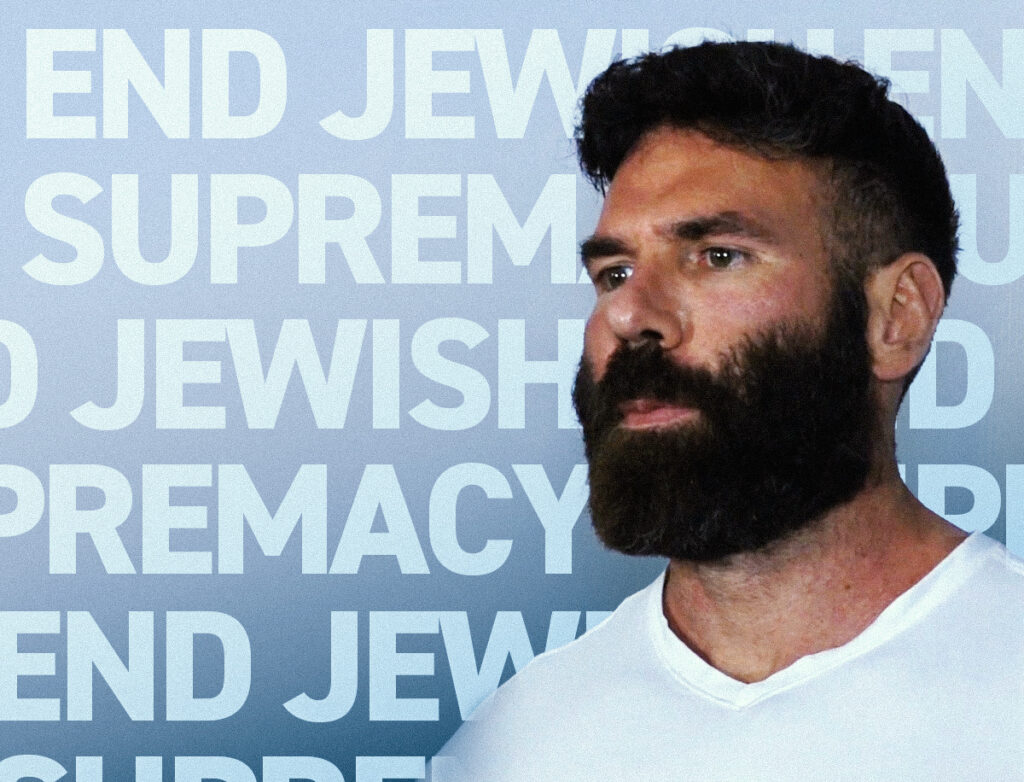
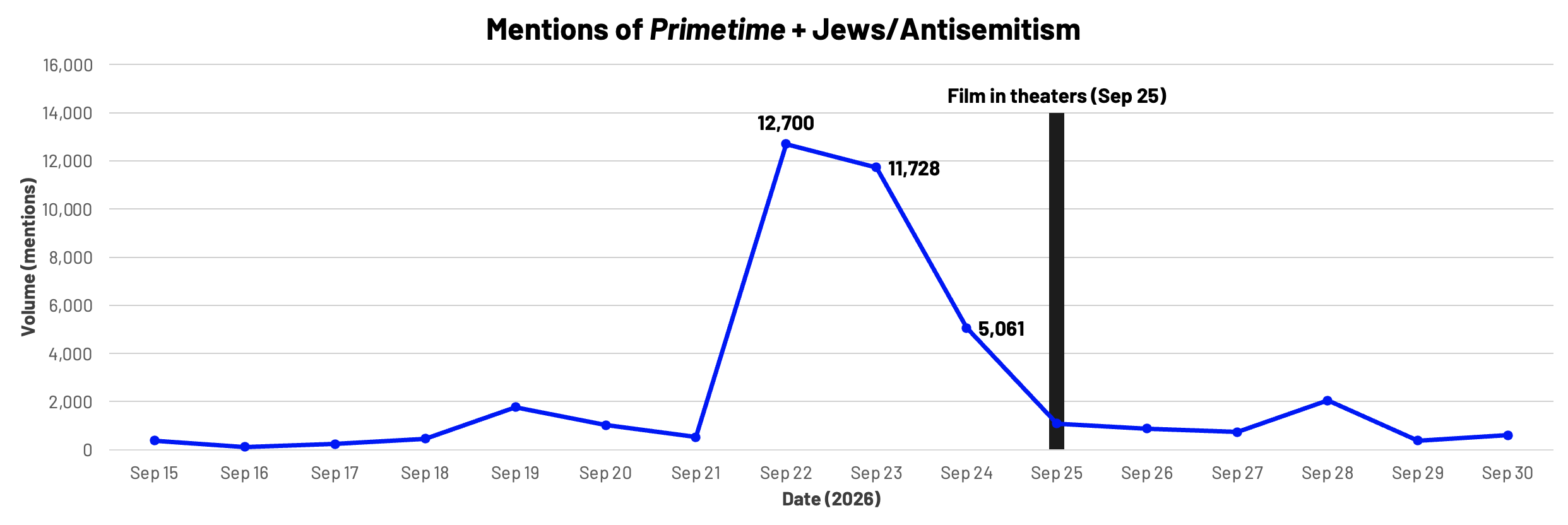
Although heated debate about the film was expected, the social media discussion surrounding the film went beyond the realm of normal discourse. In the days around the film’s release, the conversation quickly turned to antisemitic conspiracy theories. The Blue Square Alliance’s Command Center analyzed over 40,000 mentions of the film related to Judaism, antisemitism, or Israel during the ten days before and five days after Primetime’s release. In many of these mentions, social media users claimed the film was a Jewish plot to smear Hansen and protect pedophiles.
The Primetime conspiracy never reached the scale of more established conspiracy theories, but its emergence offers a revealing case study in how these narratives take shape. In a matter of days, an information vacuum around a film few people had seen combined with black-and-white thinking and centuries-old antisemitic tropes to produce a fully formed conspiracy. The story of Primetime, then, is about more than one false theory. It offers a window into how conspiracy theories are built, spread, and made to feel credible.
The Theory, Explained
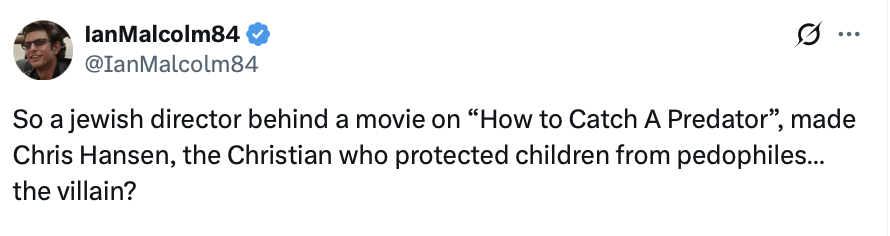
The Primetime conspiracy hinged on two heavily intertwined angles to further its antisemitic narrative. First, social media users fixated on the fact that director Lance Oppenheim is Jewish. They then extrapolated from this fact to dubiously claim that the film is meant to slander heroic Christians like Chris Hansen while uplifting Jewish child predators.
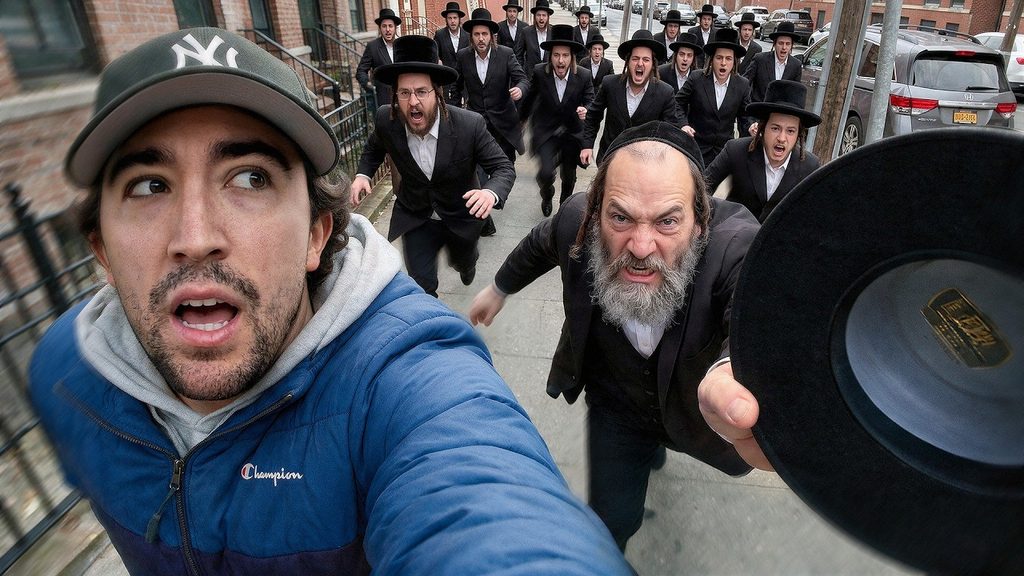
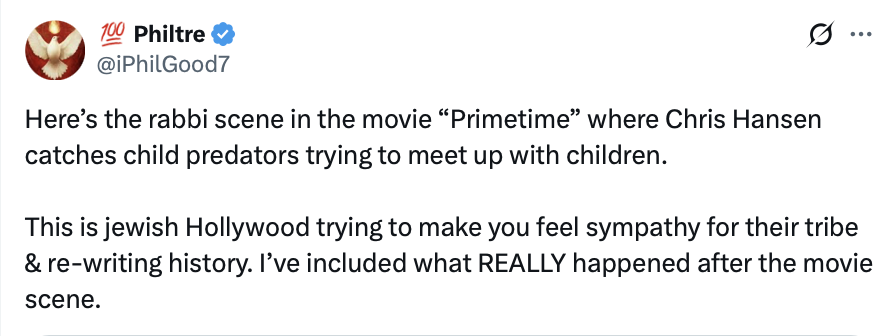
Beyond the focus on director Lance Oppenheim’s Jewish identity, conspiracy theorists also seized on a particular scene involving a rabbi. The scene progresses as follows: Chris Hansen is filming what starts as a normal episode featuring a predator who is a rabbi. While Hansen is normally in control, in this episode he is distracted and thus less sharp than usual. The rabbi in question takes advantage of this weakness and starts indignantly asking “Who gave you permission to do this?”. As he says this, the lighting and camera angles become more dream-like and intimidating. This makes the predator look intimidating but also shows he is effectively getting into Hansen’s head. Hansen then partly regains control of the room and responds that the predator did this to himself.
Some critics interpreted this scene as the rabbi making a reasonable point about Hansen’s lack of authority that the audience is meant to at least consider. Conspiracy theorists latched on to this characterization, arguing that the rabbi is clearly meant to be the moral voice of the film. This became their supposed evidence that the film was a sinister Jewish plot.
The Theory Spread Before the Film’s Release
Many of the conspiratorial claims emerged before the movie was available to the public. Online discussion peaked between September 21 and September 23, several days before Primetime was released in theaters on September 25. At that point, only a limited audience, including critics and festival attendees, would have had access to the full film.
In the absence of the film itself, online discussion relied on reviews, trailers, clips, and secondhand descriptions. Those fragments provided enough information to fuel speculation, but not enough context to evaluate many of the claims being made. The rabbi scene is a clear example: posters knew the scene existed because it had been mentioned in reviews, but many lacked the context of how the rabbi was portrayed or whether the audience was meant to sympathize with him.
Conspiracies Require a Lack of Nuance
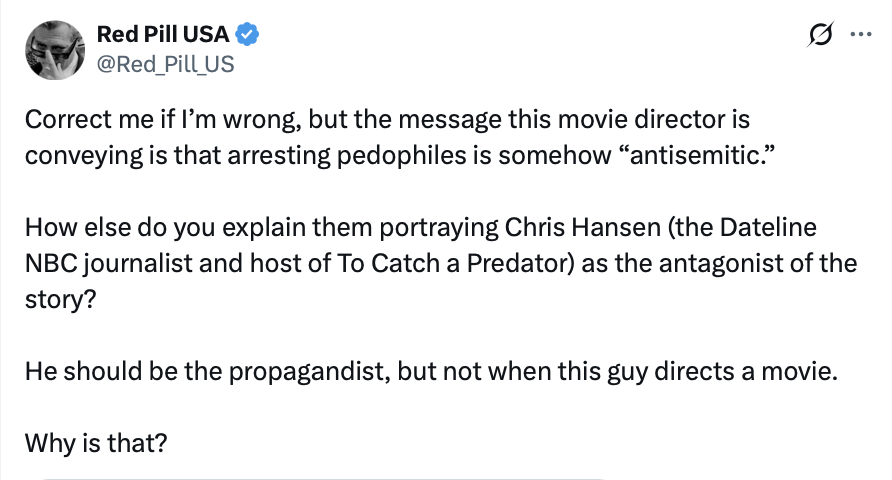
Primetime’s unflattering portrayal of Chris Hansen depicts him as impulsive, calculating, and preoccupied with ratings. Conspiracy theorists interpreted this critical portrayal of Hansen as equivalent to support of pedophilia. Because Chris Hansen’s enemies are evil, by extension, Hansen must be unquestionably good.
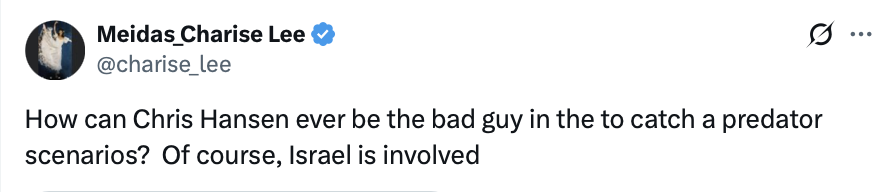
The world is complex and artists understandably want to reflect that. However, the conspiracy theorists are unwilling to acknowledge that complexity. The use of the phrase “bad guy” is a telling example. Unambiguous good and bad guys do not exist outside of some fictional stories. Primetime is plainly not one of those stories. To director Lance Oppenheim, Chris Hansen is a morally complex character opposing people worse than he is.
To the Primetime conspiracy theorists, Chris Hansen is instead a heroic crusader against a force of evil. This narrative easily leads to conspiracy theories if one continues this thought process. If Chris Hansen is unambiguously good, then everyone behind the film is either evil or manipulated. If everyone involved is evil or manipulated, there must exist some powerful evil entity capable of exerting their influence without the masses noticing.
Preexisting Narratives Informed the Primetime Conspiracy
Primetime was also an easy target for antisemitic conspiracy theories because it connected to commonly invoked antisemitic tropes that Jews control Hollywood and threaten non-Jewish children.
Trope: Jews control Hollywood
Jewish immigrants founded or ran many of Hollywood’s early studios, including Paramount, Universal, Warner Bros. and MGM. Film was a new industry in the early 1900s, without the barriers that kept Jews out of more established fields. While many of these studios were owned by Jews, they were not advancing a Jewish agenda. For one, the studios were fierce rivals, not a unified bloc. For another, studio heads largely avoided Jewish characters and themes in their films, even when the story called for them.
Nevertheless, antisemites seized on that history as evidence of coordinated control over the film industry. Conspiratorial conversations about Primetime openly employed this trope, which portrays Jews as a powerful and subversive influence.

Trope: Jews are a danger to children
Blood libel, the claim that Jews killed Christian children to use their blood in religious rituals, is among the oldest antisemitic tropes. For hundreds of years, it led to trials, expulsions, and massacres across Europe. This centuries-old accusation has survived into the modern era in subtler forms. For example, QAnon, an online far-right conspiracy spread through fake government leaks, claims that a secret elite abuses children and harvests their blood. Historians and researchers have tied that story directly to the blood libel.
The Primetime theory repurposed this same narrative; the Jews, for nebulous reasons, pose a threat to children and wish to slander the Christians trying to stop them. The single rabbi becomes evidence for collective guilt while the director being ethnically Jewish became sufficient evidence to assume wrongdoing.
How the tropes fit together
The Primetime theory followed the same structure as a criminal accusation, albeit one not based in evidence.
- Jewish control of Hollywood supplied the opportunity. The Jews can influence Hollywood to say whatever they want
- The blood libel supplied the motive. The Jews are motivated to harm children
- The rabbi scene supplied the means. The Rabbi successfully getting in Hansen’s head supposedly allowed for the Jewish influence to take hold.
Rather than use evidence, conspiracy theorists can defer to a long cultural history of hateful narratives and hope that people will be unable to identify the difference.
Why It Matters
These theories portray Jews as a group that can be held collectively responsible for the actions (or rumored actions) of individuals. As this sentiment continues. it begins to presume bad intent in anything a Jewish person makes, regardless of the facts. And, because both tropes have a long history and profound influence in the culture, they have real power despite their absurdity. For example, in 2019, the gunman who attacked a Chabad synagogue in Poway, California invoked Simon of Trent, an infamous blood libel case.
In the specific case of Primetime, the conspiracy remained relatively limited in scope and did not develop into a larger, sustained narrative. But it still repeated and revived antisemitic tropes that have circulated for centuries. Each of its core components has appeared in countless other conspiracy theories and antisemitic allegations. These narratives are firmly established, but they are also predictable. By recognizing these components and calling out these tropes, we can use their predictability to call out and debunk conspiratorial thinking.