
Video games are social spaces where people can spend hours online, teaming up with strangers, chatting over headsets, and building relationships. According to the Entertainment Software Association, an estimated 205 million Americans play video games, with ages of those who play ranging from as low as 5 years old to as high as 90 years old. About 83% of Gen Alpha plays video games, making it a booming industry. But in those same spaces, hate can also hide. While Video games themselves don’t create hate, the social environments around them can. As gaming continues to be central to youth culture, the presence of antisemitism in these spaces poses a concern for parents, educators, and platforms alike.
According to an ADL report, about 75% of gamers aged 10-17 encountered harassment while gaming online during their 2023 research cycle. This content included coded antisemitic rhetoric and symbols found in player usernames and messages in in-game chat functions. Since most video games allow the player to customize their name or appearance, it gives players a sense of anonymity which some use as a protection against repercussions, allowing them to spew hate. The report also highlighted identity-based harassment, with 34% of Jewish gamers saying they experienced harassment in online games.
While harassment often occurs in live chat environments, antisemitism also appears in the games themselves, especially on platforms built around user-generated content. In cases such as Roblox or Minecraft, games that rely heavily on the creativity of its userbase and often marketed towards a younger crowd, the chances of antisemitic imagery become increasingly apparent. Roblox reports that over 70 million daily active users, many under 15 years old, making them a clear target for attempted indoctrination and exposure by bad actors. Since one of Roblox key features is the customization and ability to create designs and worlds from scratch, some users use it to make recreations of tragic events or create antisemitic and/or racist mockups. Bad actors can easily create an account and promote imagery or language unsuitable for minors, with guidelines against such language seen as minimally obstructive according to reports.
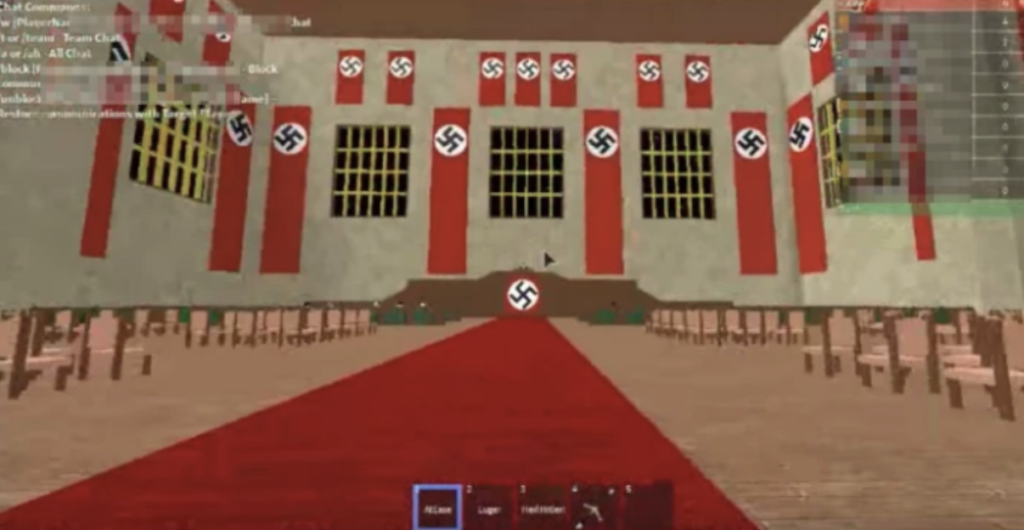
Snapshot from a public server on Roblox
Online tactical shooter games, such as Fortnite or Counter Strike, are likely to attract people who want to spew hate given the easy-to-use voice and text chat functions as well as the idealization of weaponry found in-game. While these games are marketed towards mature audiences, that doesn’t stop younger people from being able to play them. In some cases, antisemitic tropes are manufactured into a games central theme, such is the case with the 2002 game title Ethnic Cleansing, a tactical shooter game produced by the Neo-Nazi organization “Storm Front” and features the player hunting down Black and Jewish people. Your character can appear as a Ku Klux Klan member, a neo-Nazi skinhead, or the Aryan “White Will” (who resembles the domestic terrorist Timothy McVeigh). This game is rife with racist and antisemitic depictions, such as Black people being depicted as “controlled by Jewish masters” and the final boss of the game being the Prime Minister of Israel at that time, Ariel Sharon.
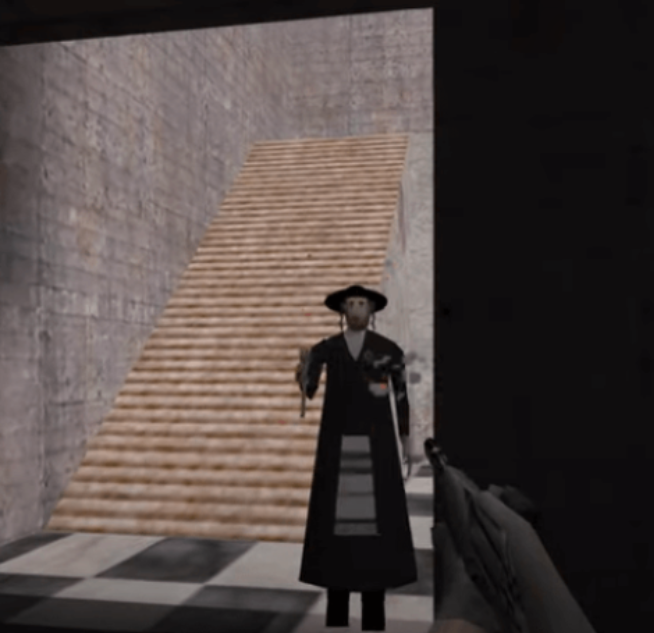
Snapshot of a level from Ethnic Cleansing
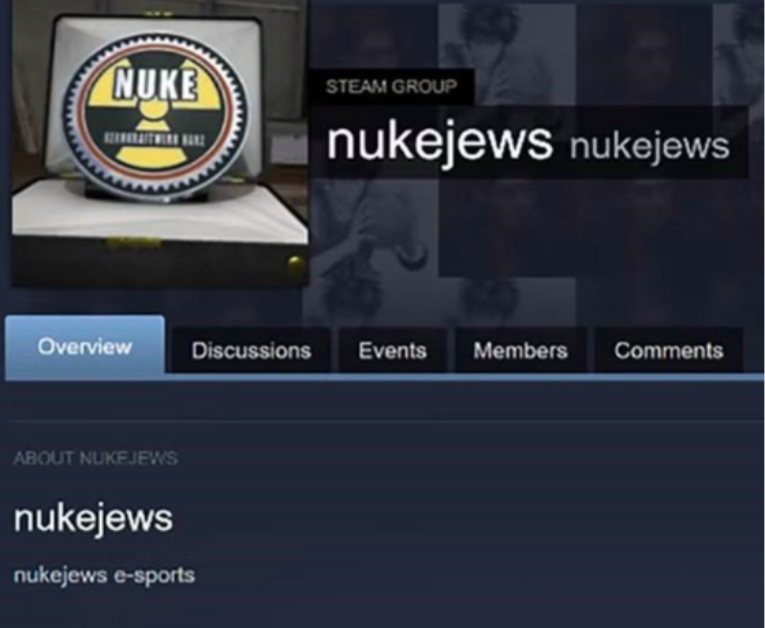
On sites commonly associated with video games, such as the game library “Steam,” antisemitic imagery and tropes are widespread within their database. The ADL Center for Extremism found about 830,000 instances of extremist imagery in user profiles, with several million more in the app’s internal chat function. Their analysis also found that 1.5 million users have some form of antisemitic language in their username, whether explicitly antisemitic or a subtle dog whistle. While Steam’s user agreement states it prohibits hate speech, the moderation team struggles to combat every instance of antisemitism on their platform, allowing many more subtle forms of antisemitism to slip through and be exposed to young gamers.
As Gen Alpha continues to grow in digital environments, developers and players must recognize that what happens in virtual spaces has real impacts. When 15% of young gamers report encountering extremist content and over a third of Jewish players report identity-based harassment, it’s not isolated but rather a systemic failure to protect younger gens from being maliciously exposed to extremist ideology.



Command Center Insights
How the Internet Reacted to the Cost of Jewish Security