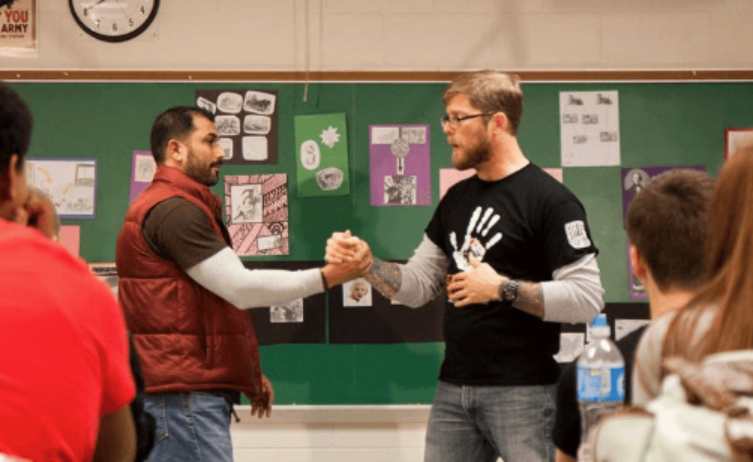
Arno Michaelis
Arno Michaelis once lived and breathed white supremacy. As a teenage skinhead in Wisconsin, he fronted a neo-Nazi punk band and took pride in violence. “I practiced violence until it seemed natural,” he later wrote, “becoming very proficient in aggression.” Fueled by alcohol and conspiracy theories, he attacked people for their race or sexuality—then justified it all through white power ideology.
But the hate didn’t last forever. After becoming a single father, Michaelis began questioning the beliefs that had defined him. “Once I began to distance myself from the constant reinforcement of violence and hatred, suddenly it began to make much less sense to me,” he reflected.
His turning point deepened through moments of unexpected kindness, such as the Black cashier at McDonald’s who, spotting a swastika tattoo on his hand, told him, “You’re a better person than that.”
In 2012, after a white supremacist murdered six people at a Sikh temple in Oak Creek, WI, Michaelis was contacted by Pardeep Singh Kaleka, the son of one of the victims, who was seeking to understand what fuels such hatred. The two formed an unlikely friendship and went on to co-found Serve2Unite, an initiative that brings anti-hate education and community-building programs into schools and public spaces.
Today, Michaelis is a vocal advocate for peace and inclusion. He co-founded Life After Hate, a non-profit that helps individuals leave extremist groups, and speaks regularly at schools, community organizations, and international conferences about the roots of radicalization. In 2023, he shared his story at the Eradicate Hate Global Summit.
Michaelis’ life now stands as both a warning and a blueprint—a firsthand look at how hatred is learned and how it can be unlearned.
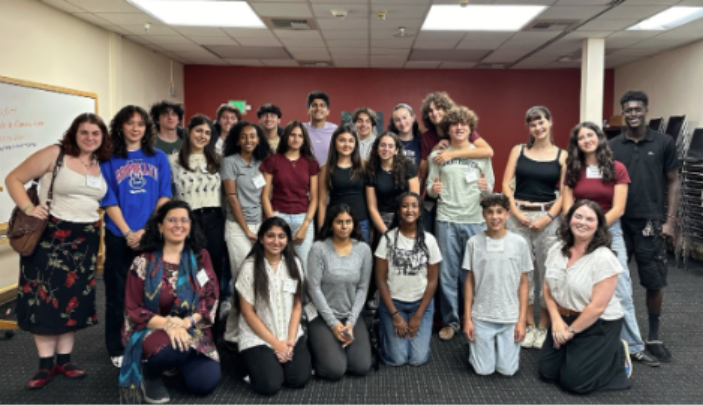
The MAJIC Council
After the October 7 attack in Israel and the ongoing war in Gaza, many Jewish and Muslim teens found themselves feeling isolated, unheard, and overwhelmed by the divisive discourse happening especially online. In Los Angeles, the MAJIC Council–Muslims and Jews Inspiring Change–offered a rare opportunity: a space for 20 high schoolers (10 Muslim, 10 Jewish) to engage in difficult conversations face to face.
Through guided dialogue, interfaith breakout groups, and community service projects, teens are learning to express grief, disagreement, and curiosity with mutual respect. They don’t always agree–but that’s not the point. “The goal is for everyone to walk away feeling like, ‘Somone understood my point of view,'” said a MAJIC alum. Students shared deeply personal experiences, from family members in Israel to stories of harassment in Gaza, and practiced how to navigate those tensions without losing their empathy.
The council helps students develop “conflict literacy”–tools to listen deeply, speak reflectively, and challenge their own assumptions. From tense conversations about Gaza to late-night pickleball games, the teens are building friendships rooted in empathy, not ideology. “We’re creating hope,” one current student said.
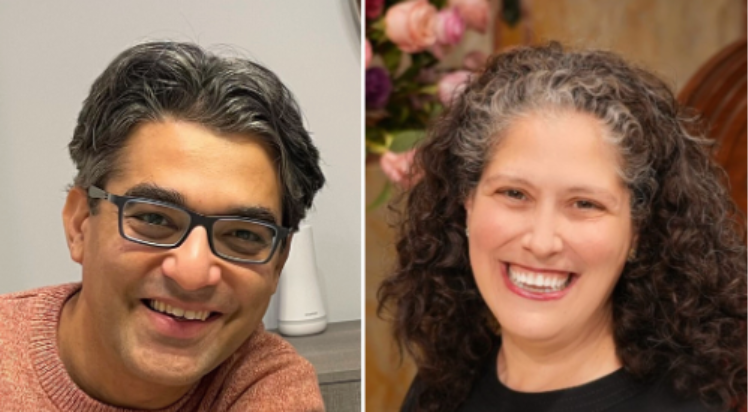
Rabbi Sarah Reines & Kurush Mistry
What began as a viral moment of division has turned into an unexpected story of growth and connection. After Kurush Mistry was filmed covering hostage posters in New York City with anti-Israel messaging in 2023—an act that led to public backlash and job loss—he chose not to retreat, but to reflect. Seeking to make amends, he reached out to Rabbi Sarah Reines of Temple Emanu-El, beginning a months-long dialogue rooted in teshuvah, the Jewish path of repentance.
Instead of turning him away, Reines welcomed the conversation. Through regular meetings, she guided Mistry in understanding Jewish history and the pain behind his actions. Their honest, sometimes difficult exchanges became the foundation of a deep, mutual respect.
This year, Reines invited Mistry to join her Passover seder—a gesture he described as deeply touching and symbolic. For both, the invitation marked something more than a meal; it was a reflection of the understanding they’ve built.
Luc Bernard
Luc Bernard, a French-Jewish game creator, is changing how young people learn about the Holocaust. Known for his powerful game The Light in the Darkness, Bernard tells the story of a Jewish family living in France during WWII. The game doesn’t focus on action or winning—it shows the real, painful experiences of Jews during the Holocaust. Bernard made the game free so that more people, especially students, could learn from it. “I wanted to show that for Jews, survival was just a matter of luck,” he said.
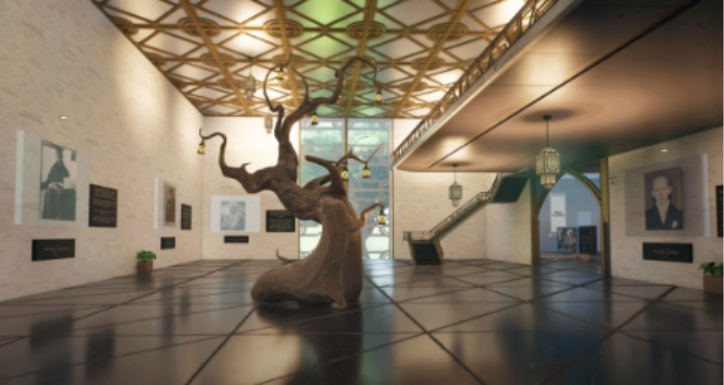
Now, Bernard has created a new way to teach history—inside Fortnite, one of the world’s most popular games. His virtual Holocaust Museum enables players to explore the history of the Holocaust in an interactive way. “Players feel like they’re part of the story,” Bernard said. “That helps them connect and remember what they’ve learned.” The museum has already reached millions of people.
Bernard was inspired to act after seeing shocking statistics: in the U.S., most young people can’t name a concentration camp, and many don’t know 6 million Jews were murdered in the Holocaust. He believes video games are a key way to reach the younger generation. “Books and movies aren’t enough anymore,” he said. “Games are where young people are spending their time, so we need to meet them there.” Now living in LA, Bernard continues to push boundaries in gaming and education.