This Halloween season, several incidents once again revealed how antisemitic symbols and rhetoric can resurface under the guise of humor or costume. In Athens, Georgia, a man dressed in a full Nazi SS-style uniform was denied entry to a bar during the weekend prior to Halloween and was later arrested for assaulting a University of Georgia student.
Within days, extremist sympathizers launched a fundraising campaign, raising over $17,000 at the time of writing, on GiveSendGo to cover his bail and legal defense, describing his arrest as an attack on “free speech.” GiveSendGo, which markets itself as a Christian alternative to mainstream fundraising sites, has repeatedly hosted campaigns for individuals accused of hate crimes or extremist activity. In the Georgia case, the same online spaces that circulated the video of the man in costume also promoted donation links, allowing supporters to turn outrage into financial backing almost instantly.
Online, the incident was met with a wave of posts defending the costume, some of which turned the conversation into antisemitic commentary about supposed Jewish influence over Western culture. One widely shared post from antisemitic commentator Apolitical3678 capsulated this theme “You can dress as a wh*re, an axe murderer, a r*pist, a demon, or the devil himself for Halloween. Whatever terrible thing you can imagine. No one will attack you. Unless you dress as a Nazi. Because morality in the West is determined by Jews.”
Unfortunately this was not the only such incident this year; two more Halloween‐related episodes drew attention. In Clive, Iowa, a man attended a business’s Halloween party dressed as Hitler, including a swastika armband and iron‐cross medallion; the costume photo went viral online, resulting in the local bar facing backlash and a volunteer hockey coach at Drake University being dismissed after posing for a photo with the man. And in Tallahassee, Florida, a student at Leon High School arrived at school on Halloween in a Nazi‐soldier costume; school administrators sent the student home and announced disciplinary action under the district’s code of conduct.
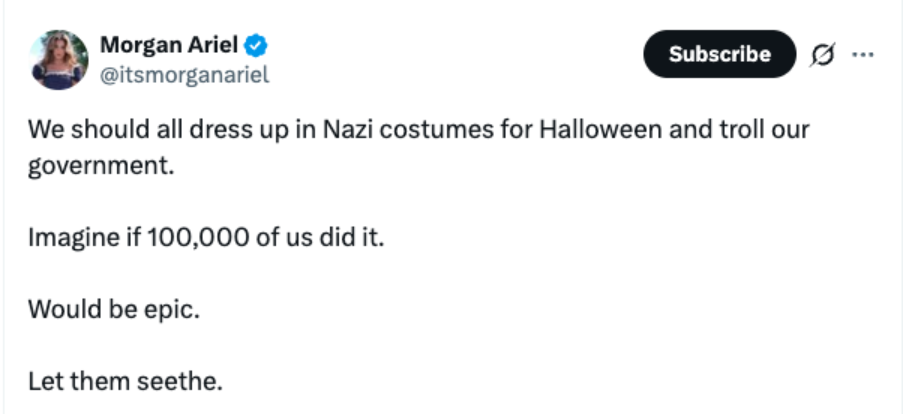
In New Jersey, several students from Manalapan High School posted antisemitic messages and on TikTok, joking about dressing up as Hitler and Holocaust babies. Screenshots of the messages were later shared widely across social media on the platforms Snapchat and Instagram. Local officials condemned the behavior, but the content circulated widely before being deleted. The school noted they are investigating the incident.
While these events drew public outrage, they also reflected a longer record of Nazi and antisemitic costumes appearing around Halloween. Recent years have seen several examples across the United States where similar imagery sparked backlash. Some of these examples include:
| Year | Location | Description |
| 2018 | Owensboro, Kentucky | A father dressed as a Nazi soldier and his 5-year-old son as Adolf Hitler at a community Halloween event, drawing national backlash. |
| 2019 | Kaysville, Utah | A fifth-grade student marched in a school Halloween parade dressed as Hitler, complete with a red swastika armband. |
| 2022 | Madison, Wisconsin | A man wore a Hitler costume for Halloween and was later fired after photos spread online. |
| 2022 | Chicago, Illinois | A student at Jones College Prep High School wore a Nazi-style uniform during a costume contest, prompting outrage and the suspension of the principal. |
| 2022 | New York City, New York | A man in a Nazi uniform was kicked out of a Manhattan bar after entering on Halloween night. |
| 2024 | Portland, Oregon | A Portland State University student dressed as a Nazi for a campus Halloween contest and was referred to the university’s bias response team. |
| 2025 | Athens, Georgia | A man in a full Nazi/SS-style uniform was arrested after allegedly assaulting a student; neo-Nazi groups later raised money for his bail. |
| 2025 | Clive, Iowa | A man dressed as Adolf Hitler at a business’ Halloween party. A volunteer hockey coach at Drake University posed for a picture with the man. |
| 2025 | Tallahassee, Florida | A high school student dressed up as a Nazi soldier to school for Halloween. |
These examples highlight how the symbols of Nazism, once unthinkable in public spaces, now more commonly reappear in society. Even when isolated, they tend to generate viral attention, amplified by online supporters who frame them as rebellion against “political correctness.”
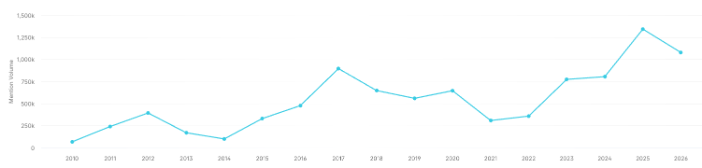
Social media remains a major accelerant and enabler of these incidents. On X and TikTok, posts promoting “edgy” Halloween costumes or mocking Jewish people circulated throughout October. Our Command Center has tracked over 13,000 posts of terms such as “Halloween” or “costume” appearing next to “Hitler” or “Jews” throughout the month. One example includes the account @LetsGoBrando45 encouraged his users to dress up as Nazis posting “you get instant LEGEND STATUS if you dress up as HITLER this Halloween 🎃. Thought you should know! 👍” Using the picture from the 2018 father and son incident in Kentucky.

Normalization is part of a longer trend in which symbols of hate are repackaged through irony and provocation. What once would have been immediately condemned now circulates as content liked, shared, or justified in the language of free expression. These incidents remind us that combatting antisemitism requires vigilance, not only against overt hate, but also against its normalization through humor and irony.