X recently introduced a new “About This Account” feature that displays the country or region an account is based in, along with details such as when the account joined the platform and how many times its username has changed. According to Nikita Bier, Head of Product at X, the feature was designed to increase transparency and help users assess authenticity. Shortly after launching, X noted that the location labels may not always reflect where a user is posting from, as VPN use, account age, and third-party account managers can affect the displayed information.
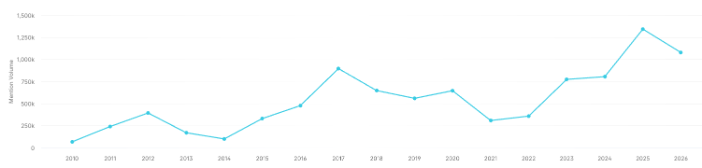
However, since its introduction on November 22, the feature has generated more than 800,000 posts and quickly become a major point of discussion as users examined the location tags of high-profile accounts online. In the following sections, we analyze how this rollout has shaped social media conversations related to antisemitism, Jewish culture, and Israel.
Foreign-Based Accounts Masquerading as American Voices
The feature first generated significant attention when it was noted that that several accounts presenting themselves as representing American voices associated with MAGA political messaging, nationalist rhetoric, and at times antisemitic content were not actually based in the U.S. Reports have shown that some accounts used American flags, patriotic imagery, and U.S. political branding but were shown as based in countries such as Turkey, Egypt, Nigeria, India, Bangladesh, and parts of Eastern Europe, and Southeast Asia. These findings fueled debates about foreign influence in U.S. political spaces and raised questions about whether overseas operators are contributing to or amplifying antisemitic narratives under the guise of domestic voices.
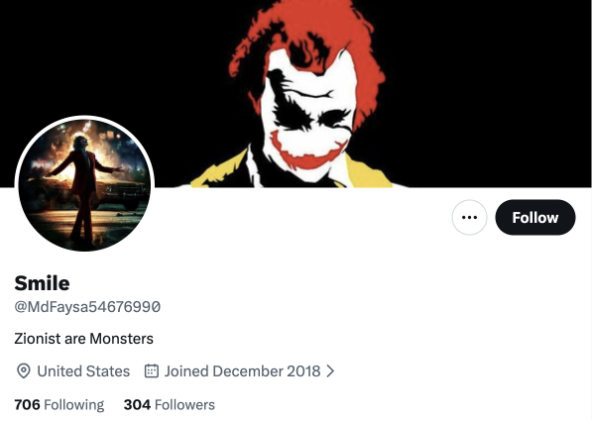
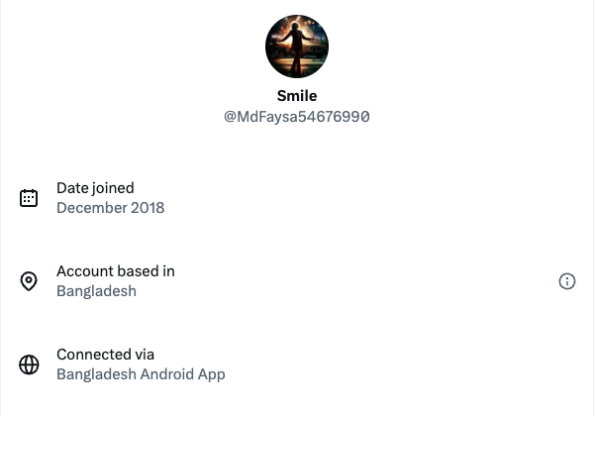
Analysis from the Command Center found that several of these accounts were pushing antisemitic conspiracy theories alleging that Jews, Zionists, or Israel control the U.S. government. According to the new location feature, one account, @1776General_—which describes itself as a “constitutionalist, patriot 🇺🇸, ethnically American”—is based in Turkey . The account, which has more than 140,000 followers, frequently presents itself as “America First” while blaming Jews for various societal problems in the United States. Another account, @MdFaysa54676990, which has been especially active in spreading these conspiracies and has posted related content more than 3,500 times in 2025, also claims to be located in the United States but is shown as based in Bangladesh.
 |  |
Anti-Israel Influencers Also Show Discrepancies in Claimed Locations
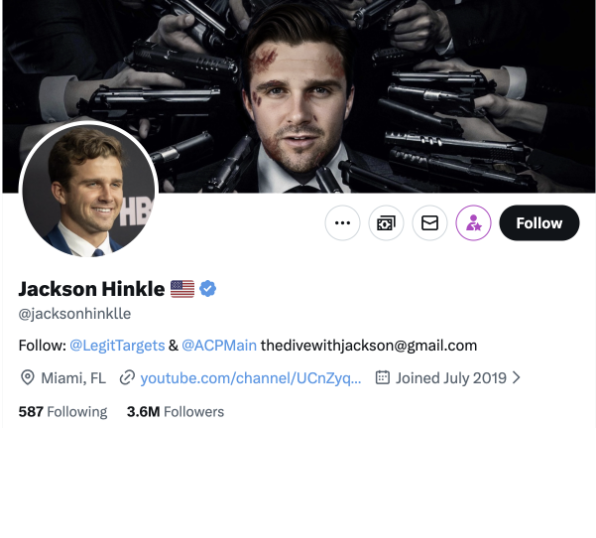
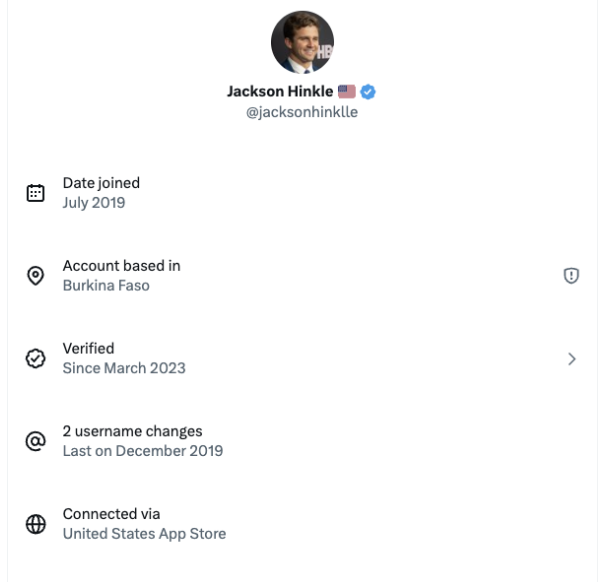
Just as some far-right accounts have spread antisemitic ideas to American audiences, comparable patterns were also found among certain far-left influencers. A prominent example is Jackson Hinkle, an X personality with more than 3.6 million followers who has posted over 7,000 times on topics related to antisemitism, Judaism, and Israel in 2025, generating more than 16 billion impressions. His content frequently promotes conspiratorial narratives that blame Zionists, Jewish individuals, or the state of Israel for global or domestic crises, often using stereotyped language and framing Jews or Israel as part of a hidden “deep-state” structure controlling world events. While his account claims to be located in Miami, Florida, the new X feature lists it as based in Burkina Faso. His secondary account, @LegitTargets—which he links to in his bio—is also labeled as based in Burkina Faso.
 |  |
Another example includes @TorahJudaism, an account that posts anti-Zionist content framed as religious teaching, using selective or distorted interpretations of Judaism to argue that Zionism and the state of Israel are illegitimate or opposed to “true” Jewish values. The account claims to be based in New York, the X feature reveals it is based in the Philippines.
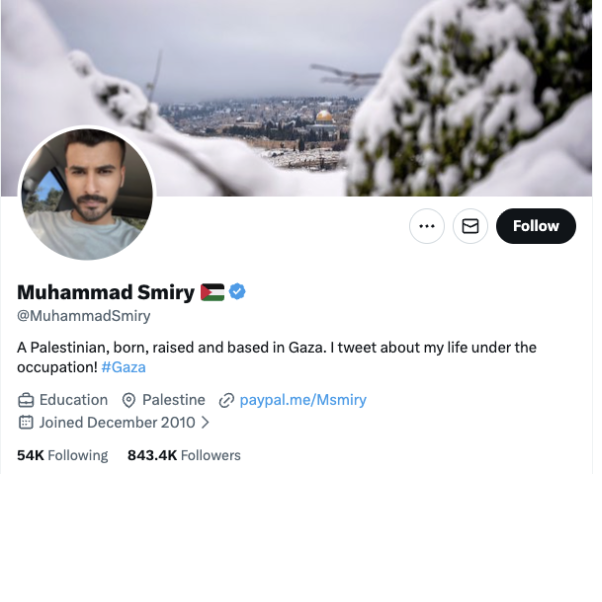
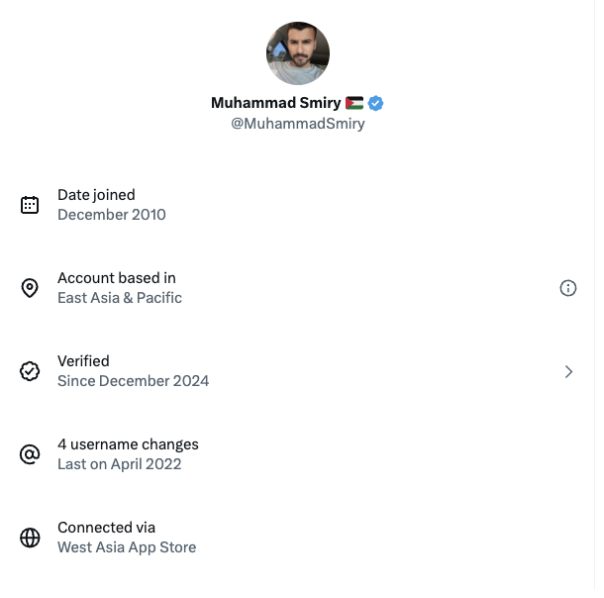
For many users focused on the rise of antisemitic and anti-Israel rhetoric on social media since October 7, 2023, the findings amplified long-standing questions about the origins and authenticity of certain conflict-related narratives circulating online. Several accounts positioning themselves as Palestinian reporters, Gaza-based eyewitnesses, or local activists were found to be based in unrelated regions. In some cases, accounts providing daily “on-the-ground” updates were shown as operating from entirely different continents raising questions over the authenticity of their content.
 |  |
Misinterpreted Israel Tags Drive Confusion, Boycotts, and Conspiracy Theories
While many discussions centered on differences in where some accounts were claiming to operate from and the actual location revealed in the update, , some of the biggest controversies came from accounts marked as based in Israel leading to an influx of antisemitic reactions.
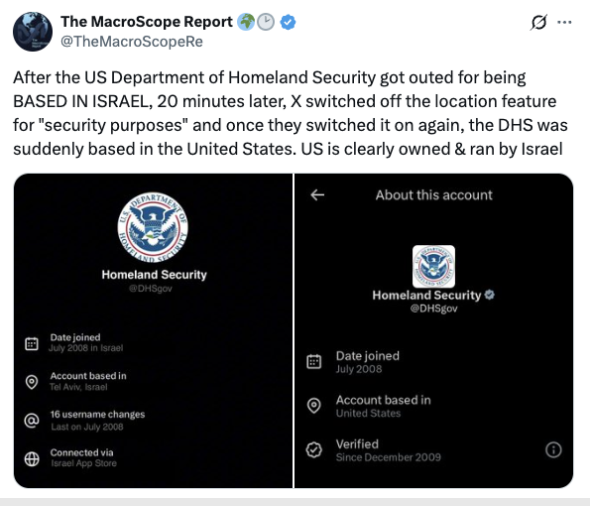
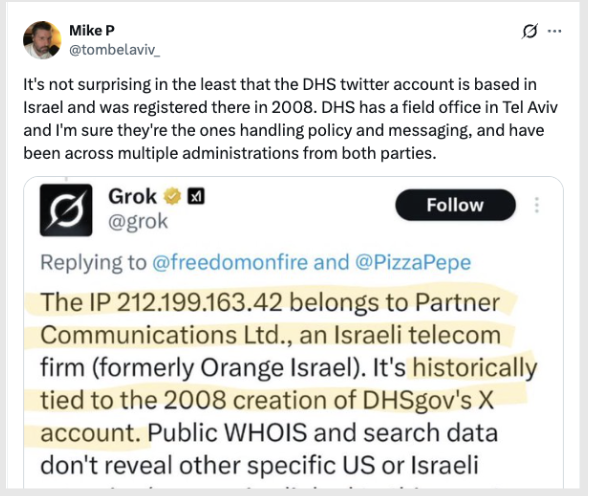
A screenshot showing that the U.S. Department of Homeland Security account appeared to show an Israel-based location went viral on social media. This was later attributed to technical instability and potential screenshot misinterpretation as the photo shared showed the location as being in “Tel Aviv” while the feature typically shows locations based on countries or regions. Despite this, the incident became fuel for conspiracy theories, including claims that it proved improper influence or “control” by Israel or Jews. Over the weekend we tracked an 11% increase in such posts compared to the two days preceding it.
 |  |
Another example involved singer Mariah Carey, whose account briefly displayed an Israel location tag. Many users interpreted the label as a political statement, leading to confusion among fans, widespread speculation online, and calls for a boycott. It was later explained as an issue related to account management tools rather than any intentional stance, but the reaction showed how quickly the new feature can influence public perception.
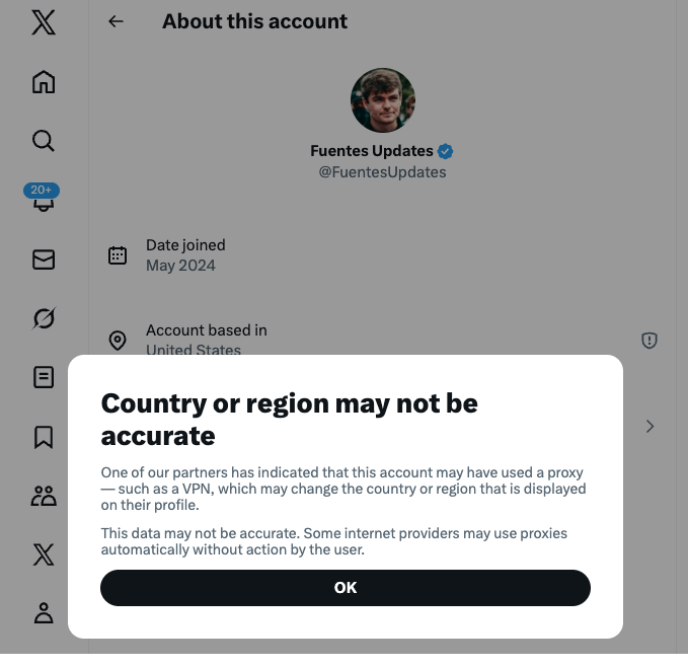
In some cases, X flags when an account appears to be using a VPN to mask their locations. In some cases, such as with @FuentesUpdates, a fan account for Nick Fuentes, and the conspiratorial account @RedPillMediaX, both accounts have been flagged for possibly using a VPN to have their location marked as in the U.S.