Netflix recently released the second season of its hit show Nobody Wants This, a comedy-drama about Joanne, a non-Jewish woman, and Noah, a rabbi, as they navigate their relationship and family expectations. The first season was widely praised for its representation of Jewish culture, and characters but also drew criticism for leaning on familiar Jewish stereotypes—such as jokes about Jews not being athletic, the rabbi not looking “Jewish enough,” and the overbearing Jewish mother trope.
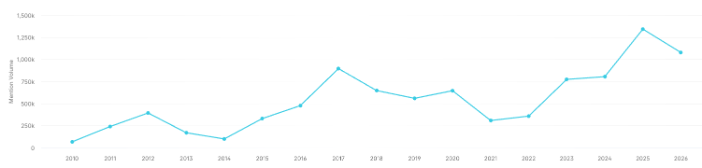
The show’s second season has faced a surge of antisemitic backlash online. Comments have ranged from claims that the show is “Jewish propaganda” or examples of so-called “Zionist-washing.” Other users mocked it with remarks like having “Jew fatigue” or suggesting that Jewish storylines are part of a hidden agenda.
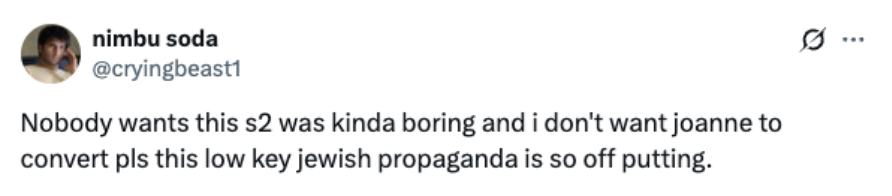
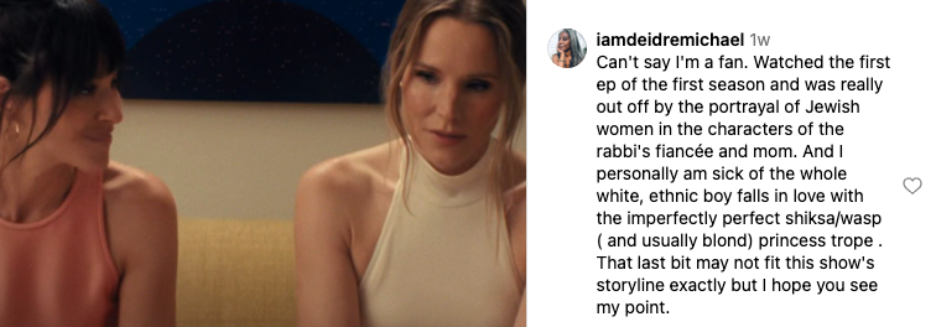
At the same time, many Jewish viewers have voiced mixed feelings. Some appreciate the representation and visibility, while others criticize the writing for recycling-tired stereotypes. One viewer wrote that they found the portrayals of Jewish women outdated and unfunny. Another said that while the show tries to move beyond stereotypes in its second season, it doesn’t go far enough. Others expressed frustration with recurring Hollywood tropes, such as the Jewish man paired with a non-Jewish woman, calling it clichéd and limiting. Another commenter added to the discussion, noting that the show’s depiction of Jewish practices is sometimes outright inaccurate, one scene features a rabbi discussing mourning Tu Bishvat, a joyful celebration of trees and nature.
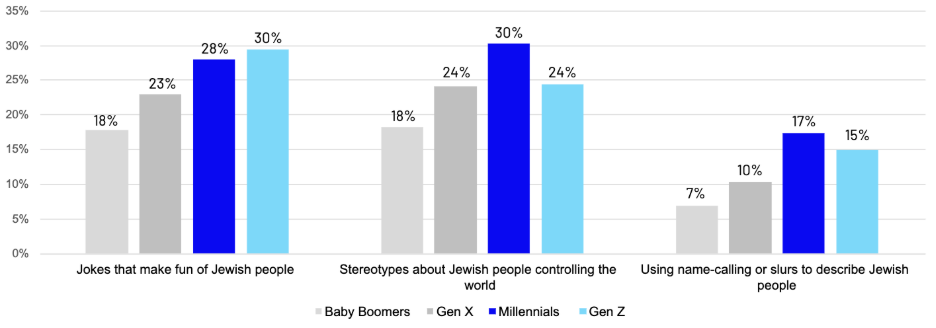
These portrayals, even when exaggerated for humor, can have real-world consequences. The Blue Square Alliance Against Hate’s U.S. Antisemitism Landscape Survey found that 45% of Americans do not personally know a Jewish person. Our data shows that this gap in familiarity matters: people who don’t know any Jews are less likely to recognize antisemitic stereotypes as harmful. For example, there’s a 6% gap between those who do and don’t know someone Jewish in saying that the stereotype about Jews “controlling the world” is harmful, and a 3% gap when it comes to recognizing name-calling or slurs as harmful. For many, shows like Nobody Wants This become their main exposure to Jewish identity—meaning stereotypes can shape perceptions in subtle but powerful ways.
| How harmful are these statements against Jewish People | who personally does not know anyone Jewish | who knows someone Jewish | Gap in Familiarity |
| Stereotypes of them being wealthy and educated | 20% | 22% | 2% |
| Stereotypes that they are penny pinchers | 27% | 30% | 3% |
| Conspiracies that they ‘control the world’ | 36% | 42% | 6% |
| Name-calling and Slurs to address Jewish people | 57% | 60% | 3% |
This isn’t a new concern. Research from USC Annenberg’s Norman Lear Center shows that Jewish characters on mainstream television are often depicted through narrow cultural or behavioral lenses—neuroticism, overprotectiveness, materialism—rather than as multidimensional individuals. These portrayals can influence how non-Jewish audiences perceive Jewish people, particularly when they have little personal exposure to Jewish communities.
BSA Command Center’s qualitative studies echo this pattern. Participants who had little contact with Jews often said that popular media shaped their understanding of Judaism, particularly through comedy. While humor can build familiarity, it can also normalize caricatures. Algorithms on social media can reinforce those impressions, circulating the same jokes or stereotypes repeatedly. Even so-called “positive” stereotypes can evolve into mythological tropes when left unchallenged.
The cycle is familiar: a show featuring Jewish characters becomes popular, viewers with limited exposure to Jewish life form impressions from exaggerated portrayals, and social media amplifies both admiration and mockery. While BSA’s survey found that roughly 70% of respondents recognized that jokes, slurs, and conspiracies about Jewish people are harmful, misinformation and distorted portrayals persist. As more Jewish stories are portrayed, and gaining visibility on screen, ensuring representation that reflects the full range of Jewish life—not narrow stereotypes—remains essential.