Since the assassination of Charlie Kirk on September 10th, there have been more than 26 million posts reacting to his death. Kirk, a conservative commentator and founder of the youth-focused political organization Turning Point USA, was shot while speaking at Utah Valley University in what authorities have described as a targeted attack. He was pronounced dead shortly after, and while a suspect has been arrested, the investigation remains ongoing. The volume of online discussion highlights the intensity of public reaction, ranging from grief and sympathy to speculation, blame, and conspiracy theories.
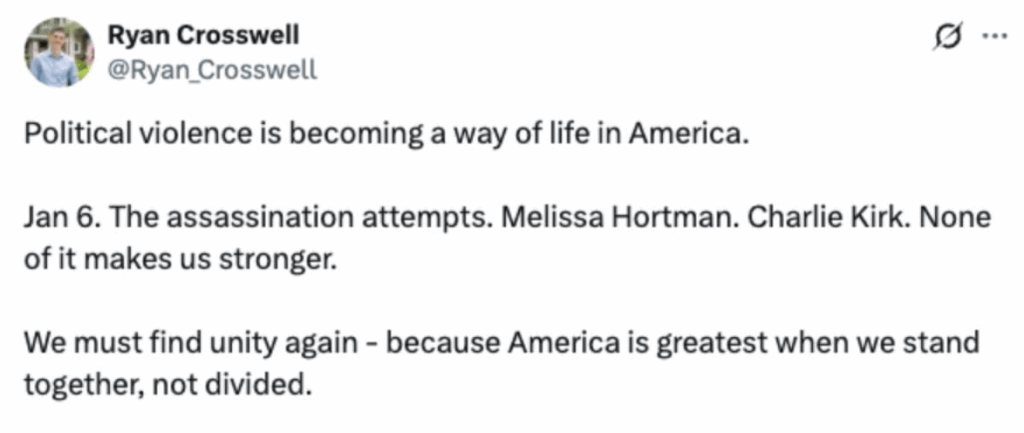
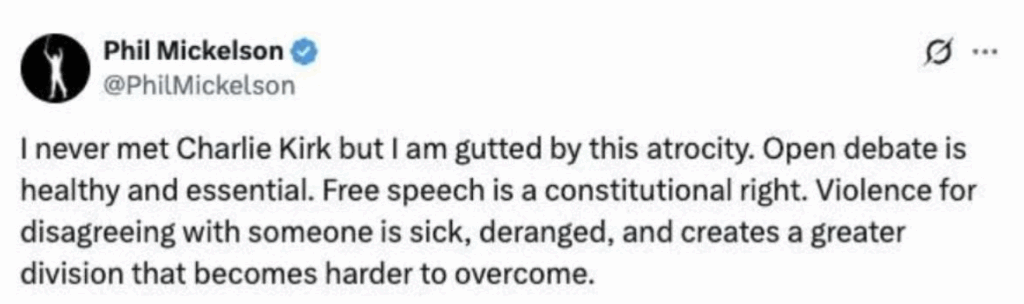
On social media the assassination has been widely framed as part of a troubling rise in political violence in the United States. His death prompted an immediate wave of condolences, with many acknowledging the gravity of a public figure being targeted while speaking on campus. Calls for unity circulated broadly, with voices emphasizing that disagreement with someone’s views is no justification for violence. Political leaders across the spectrum condemned the attack and urged a reduction in hostile rhetoric.
Students Weigh in on Open Dialogue on Campuses
The incident has also fueled a broader conversation about the shrinking space for open dialogue in the U.S., particularly on college campuses. Surveys, including one released this week by the Foundation for Individual Rights and Expression (FIRE), show declining tolerance for controversial speakers, with record numbers of students finding it acceptable to shout down an event, block attendees, or even resort to violence to silence a speaker. In this context, Kirk’s assassination sharpened concerns online that the culture of shutting down opposing viewpoints may be contributing to an environment where confrontation might be replacing conversation.
Conspiracy Theorists Tie the Murder to Israel
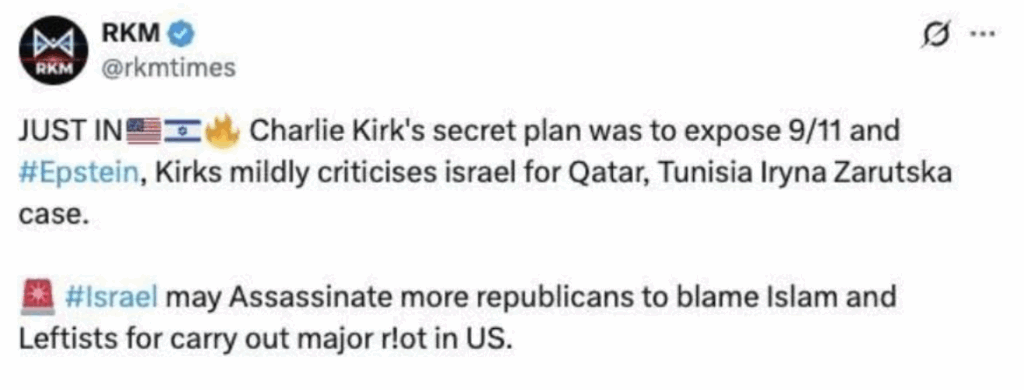
Amid the broader reactions, there were also posts entangling Kirk’s assassination with rhetoric about Jews and Israel. There were 960,000 mentions of Charlie Kirk that also included Israel, Jews, or Zionism, accounting for 4% of all Kirk-related conversations and generating over 129 million impressions. Analysis found that Israel was the sixth most-discussed topic online in connection to his death, and the third most-mentioned location after the U.S. and Utah. This topic surfaced in conspiracy theories surrounding the shooter’s motive.
Some posts framed the attack as the work of a “professional sniper” and linked it to Mossad, while others explicitly claimed Jews orchestrated the killing. Israeli leaders’ swift statements of condolence were also cited by conspiracy theorists as supposed evidence of advance knowledge. In parallel, some accounts described the incident as a false flag meant to justify new restrictions on dissent, drawing comparisons to the Reichstag fire and warning of a “Reichstag moment” in U.S. politics.
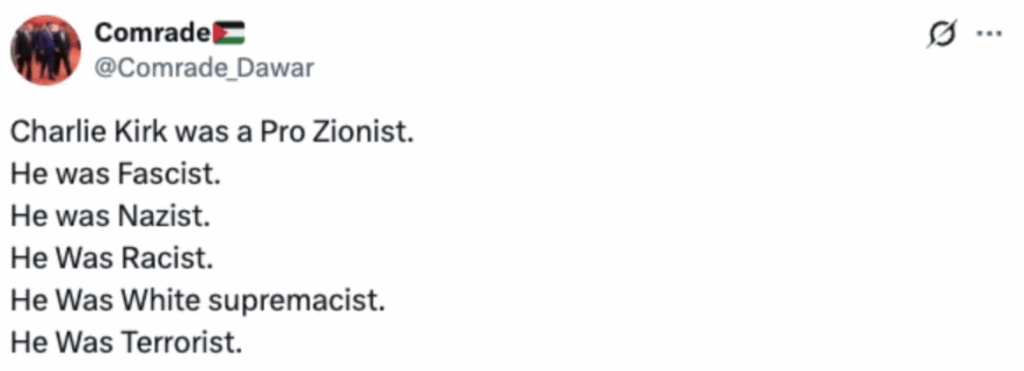
In contrast, a smaller number of users celebrated Kirk’s death, labeling him a “Zionist” or a “Nazi,” reflecting how his outspoken pro-Israel positions and combative style made him a polarizing figure. According to Command Center data, the term “Nazi” appeared more than 100,000 times in conversations about Kirk following the assassination, while “Zionist” appeared over 80,000 times. Posts mocking his death along these lines drew significant backlash, particularly when educators or professionals were identified among those making such remarks, prompting calls for accountability from their institutions.
Updates (09/19): Charlie Kirk’s Murder Becomes a Conspiracy Battleground
22-year-old Utah resident Tyler Robinson has been charged with the fatal shooting of conservative commentator Charlie Kirk at Utah Valley University last week. Robinson has no prior criminal record and had recently become more politically active, according to reports.
Law enforcement says the motive behind the attack remains unconfirmed. That uncertainty has fueled a wave of accusation games on social media, where users are blaming rival political camps and, increasingly, drawing Jews and Israel into the conversation. Despite no apparent connection according to law enforcement, mentions of Kirk connected to antisemitism, Jewish people, and Israel continued to intensify and rose by 58% this week.
Reports from law enforcement’s investigation have led some to believe that Robinson recently shifted toward more left-leaning views, particularly around LGBTQ and transgender rights. Text messages show him expressing anger at Kirk’s rhetoric on these issues and declaring that “some hate can’t be negotiated out.”
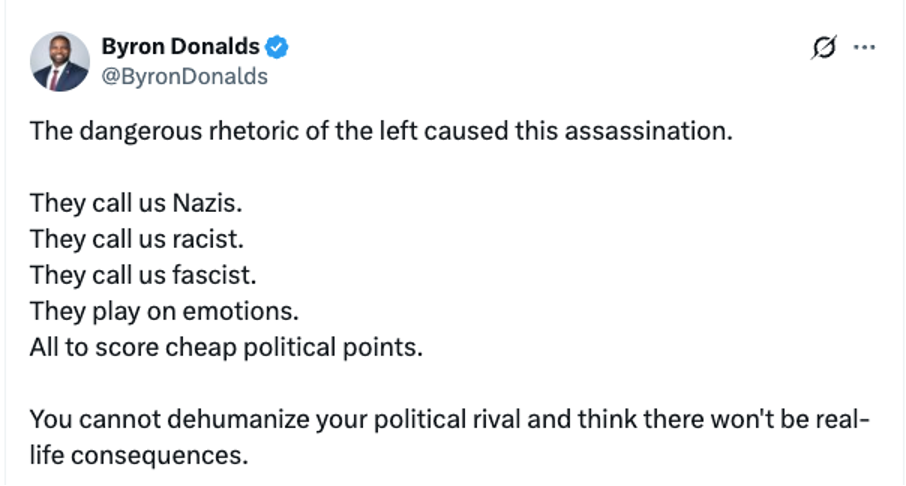
Investigators also found bullets engraved with anti-fascist slogans and cultural references. Officials emphasize, however, that the investigation is ongoing and no single motive has been confirmed. Still, right-wing commentators have seized on the evidence to argue that the left’s habit of labeling opponents “Nazis” encourages violence—a narrative that has fueled a spike in posts mentioning “Nazi” in connection with Kirk’s death.
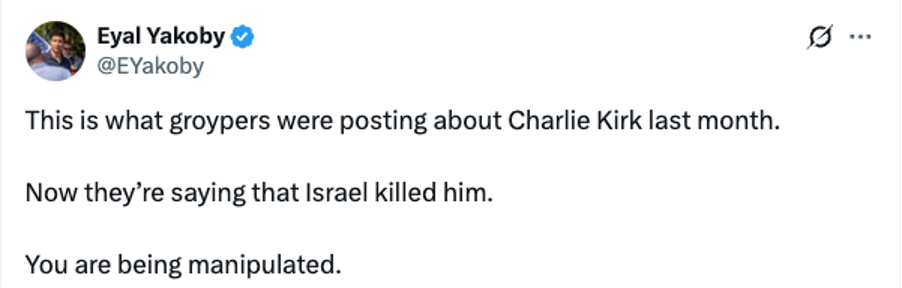
Speculation has also swirled around whether Robinson had ties to the Groypers, a far-right movement linked to Nick Fuentes that has often clashed with Kirk.
With over 600,000 posts mentioning the Groyper movement this week, the main piece of evidence being cited is the engraving of “O Bella ciao, Bella ciao, Bella ciao, ciao, ciao!” on one of the unfired casings recovered near the shooting site. The song, an Italian folksong from World War II, has been found in some Spotify playlists associated with members of the movement.
Others also pointed out to a Facebook photo of Robinson dressed in black tracksuit and “Slav squat” pose—imagery sometimes linked to Groyper meme culture. Yet officials say there is no evidence tying Robinson to the movement, and experts caution that these symbols often carry multiple meanings.
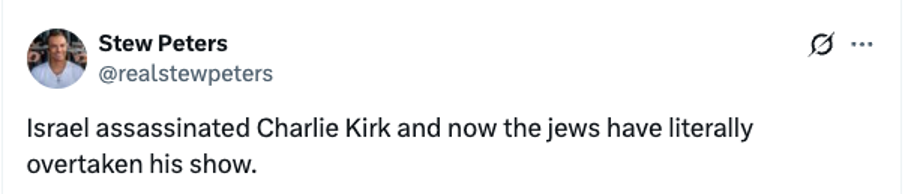
A third, and one of the fastest-growing, narratives blame Jews and Israel. Conspiracy theories claiming that Mossad or Israeli interests orchestrated Kirk’s assassination have surged past two million posts in recent weeks—960,000 last week and another 1.39 million this week alone.
The release of new evidence from law enforcement has only fed these theories, with users dismissing it as “too convenient” and alleging a cover-up. Prominent voices such as Candace Owens and Tucker Carlson have also amplified speculation, suggesting Kirk was pressured by Israel to toe a pro-Israel line and was targeted because he was about to “turn on Israel.”
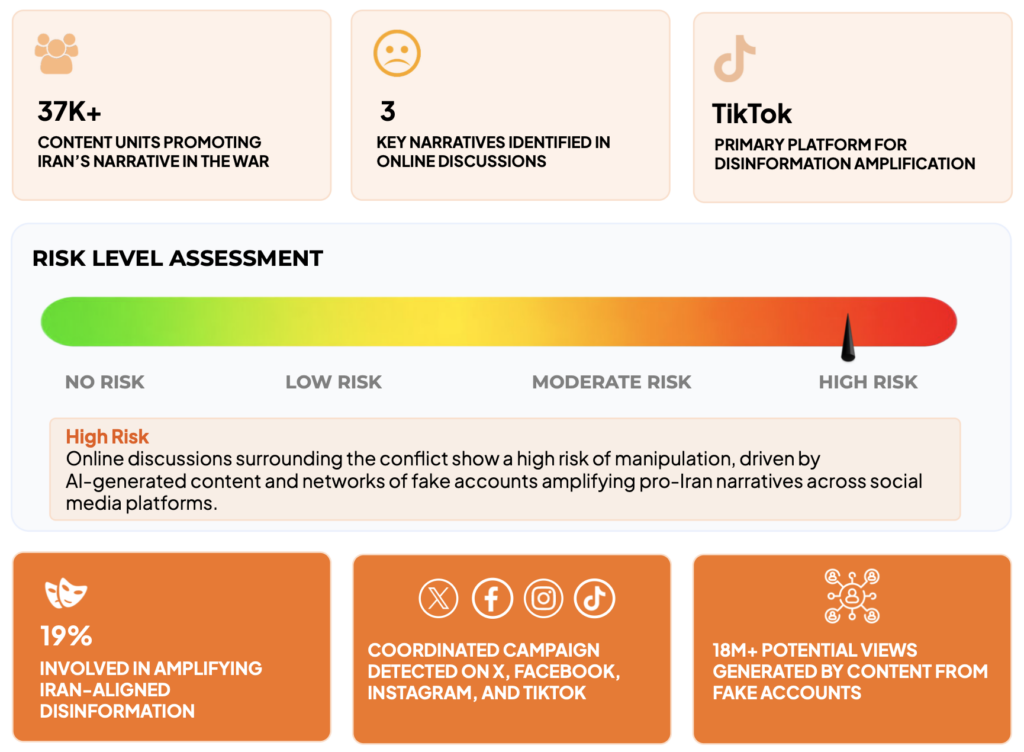
Israeli officials, including Prime Minister Benjamin Netanyahu, have condemned these accusations as “insane” and “outrageous,” but the narrative continues to spread across social media. U.S. officials and researchers also reported that foreign adversaries, particularly Russia, China, and Iran, have been actively amplifying these conspiracies to exploit divisions and inject antisemitic narratives into the debate.
These narratives—whether pointing to the left, the far right, or Jews and Israel—reflect how Kirk’s murder has become less about the facts of the investigation and more about projection. Although there is no evidence to suggest that Jews or Israel had any involvement in Charlie Kirk’s assassination—and nothing in the investigation warrants invoking Jewish-related topics—these narratives continue to spread widely on social media.
What began as a tragic act of violence has been reframed into an accusation game, with conspiracies targeting Jews gaining disproportionate traction. The persistence of these claims underscores how quickly antisemitic tropes are injected into public debate, even when entirely unsupported by facts.