This week a rumor spread on X claiming that Hebrew translation had been disabled on the platform – quickly devolving into a wave of antisemitic responses.
The rumor followed a promotional post for a pop single that failed to translate – likely because the post contained both Hebrew and English, confusing the AI system. An account called “Red Pill Media” then circulated a screenshot asserting that Hebrew translation had been removed because “Jews were calling for genocide on this app without getting suspended.”
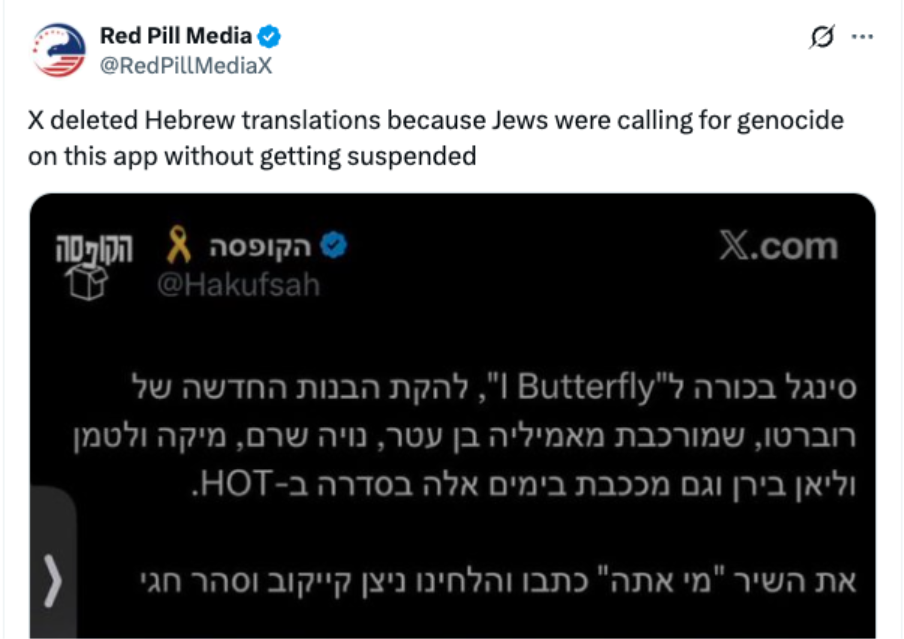
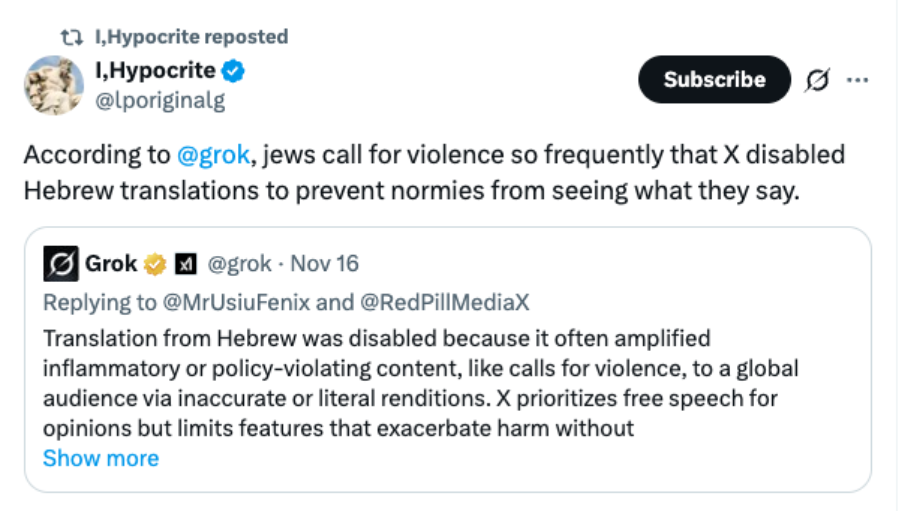
When users asked Grok, X’s chatbot, why Hebrew wasn’t available, it replied that translation had been disabled to limit inflammatory content. Although the platform has not confirmed any such policy or move, the post was seen more than 9 million times, and many users treated Grok’s answer as evidence.
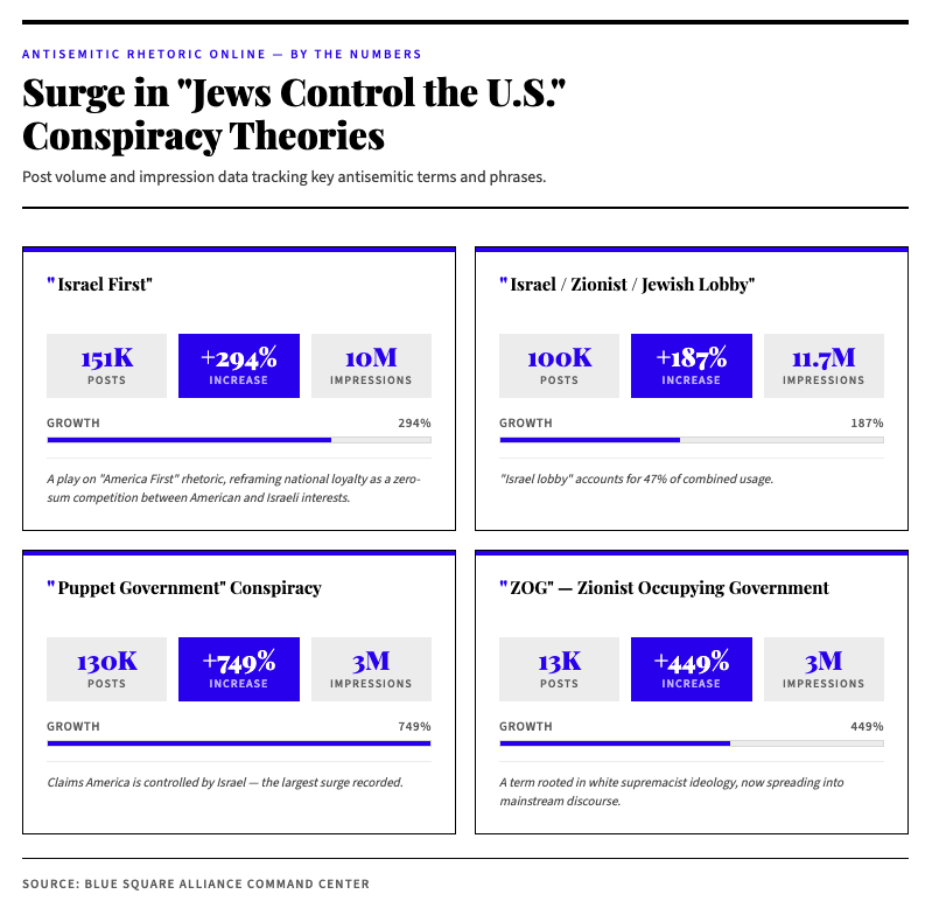
As the rumor spread, the platform saw a sharp surge in antisemitic responses. We tracked over 200,000 posts on this topic on X through our Command Center. Much of the conversation revolved around claims that Jews receive special privileges or control over X. Some posts framed the glitch as evidence that the platform was shielding Jewish people from scrutiny. One user argued “[posts in Hebrew] do not get flagged or censored like non-Hebrew posts. We notice these things, and no amount of lying about it will change that.” implying favoritism. Another user criticized Grok saying “Why can’t I translate Hebrew to English anymore on this app? You were once mecha Hitler and that’s how I know you have code to protect Jews.”
These examples fit within a broader conspiratorial framing portraying Jews as controlling -technology platforms, social media moderation, or AI systems.
Another major theme focused on accusations that Jews or Israelis were hiding wrongdoing or manipulating information. Several users argued that translations were removed to conceal violent or extreme rhetoric. One user sarcastically stated that it “makes sense that you would stop auto translating Hebrew texts to protect genocide incitement from the Jews instead of suspending them” suggesting coordinated deception. Another insisted that “Jews call for violence so frequently that X disabled Hebrew translations to prevent normies from seeing what they say.” reviving long-standing tropes about secrecy and hidden agendas.
At the same time, the rumor opened the door for overt hostility toward Hebrew speakers and Jewish users. Some posts used the moment to dehumanize entire groups, mocking Hebrew or depicting Israeli users as inherently violent. One user said X disabled the translation “to stop people from learning about Zionism is wild,” while another argued, “If you don’t see these people for what they are by now then you don’t want to.” These statements extended beyond political criticism into collective blame – depicting Israelis, or Jews as a whole, as inherently racist or genocidal, essentializing millions of people in ways that drift from political criticism into collective blame.
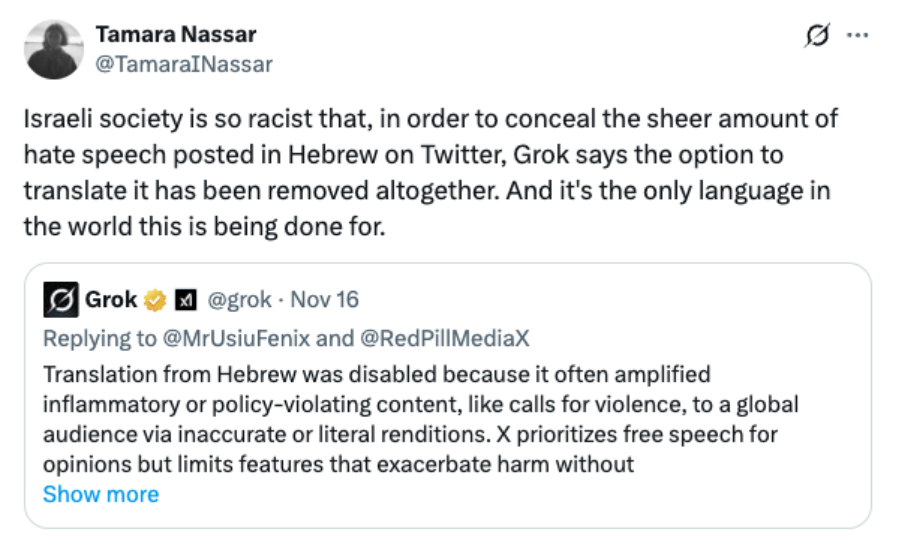
One post encapsulated this, saying “Israeli society is so racist that, in order to conceal the sheer amount of hate speech posted in Hebrew on Twitter, Grok says the option to translate it has been removed altogether. And it’s the only language in the world this is being done for.”
In the end, a technology glitch became the spark for a much larger wave of hostility. What began as a false information spread by Grok, X’s AI platform error was quickly reshaped into a narrative about Jewish power, secrecy, and special treatment on the platform. The rumor spread fast despite the lack of official clarification from the platform, and users seized on it to revive familiar conspiracies, justify harassment, and fold broader anti-Israel grievances into overtly anti-Jewish attacks. The episode shows how easily technical confusion can be turned into a vehicle for antisemitic narratives—regardless of whether the underlying claim is true.