In 2025, Jewish communities around the world experienced a troubling surge in antisemitic attacks, vandalism, and online discourse. In response, Jewish leaders and allies came together in solidarity, as antisemitic events continued to rise. The Blue Square Alliance Against Hate Command Center looked back at the biggest trends in our data, covering online conversations surrounding antisemitism, Judaism, and Israel, from the last year, leading to the release of our 2025 Year in Review report.
At first glance, the year appeared quieter. Total conversation volume dipped slightly compared to 2024. But that surface-level cooling masked a deeper shift. While overall mentions declined, participation grew, with 17 million unique authors engaging in the conversation, a 10% increase from 2024. Antisemitism did not disappear; it dispersed. The conversation moved away from a handful of viral spikes and dominant accounts and instead reached broader audiences, traveling farther and embedding itself more deeply into everyday online discourse.
One of the clearest changes was the declining dominance of Israel and Zionism centered conversation. As war-related discussion eased from its 2024 highs, it pulled overall volume down 6% in 2025 . But when Israel and Zionism were removed from the picture, a different story emerged. The estimated reach of conversation about Jews and antisemitic themes increased by 29% and stayed elevated. Rather than fading, antisemitism became less tethered to Middle East news cycles and more present across domestic politics, culture, and social commentary, making it harder to spot and easier to normalize.
Read more about the dynamics across 2025 in our deep dives including:
- Israel/War Discourse: The Central Backdrop, and the Start of a Shift
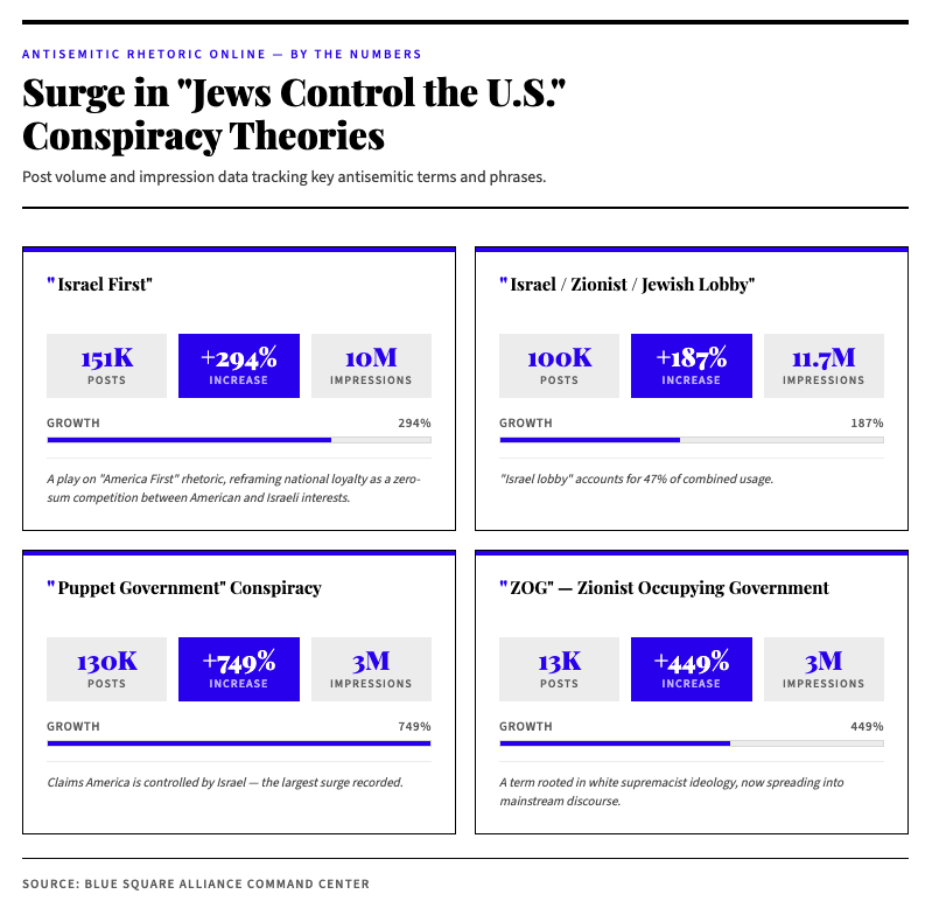
- Conspiracy Theories: A Growing Layer, With Three Themes
- Holocaust and Nazi Language: Political Shorthand
- AI and Platform Dynamics: How Technology Reshaped the Conversation in 2025
- Normalization via Humor, Dog Whistles, and Coded Language
- Radicalization and Dehumanization: Three Escalating Signals
- Feelings, Fear, and the Effect on the Jewish Community
Together, these shifts point to a defining truth about 2025. Antisemitism did not decline. It adapted. It became more ambient, more coded, and more embedded in broader cultural and political conversation. As the year closed, the data made one thing clear. Understanding what changed in 2025 is not just about measuring volume. It is about recognizing how antisemitism is evolving and what that means heading into 2026.