
Since TikTok’s U.S. deal was finalized on January 22, a new social app, UpScrolled, has surged into the spotlight. The platform presents itself as an alternative for users who believe mainstream social media sites suppress certain political content, especially pro-Palestinian posts. In online conversation, UpScrolled is repeatedly framed as a place with “no censorship” and “no shadowbanning.” Its founder, Issam Hijazi, has reinforced that narrative publicly, claiming that “Zionist” money and influence shape what major platforms allow users to see—language that echoes longstanding conspiracy tropes about Jewish control.
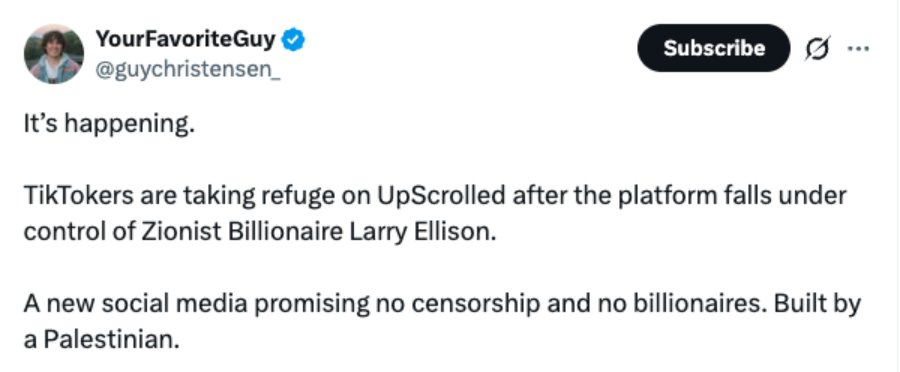
As the app has grown, it has quickly become a hub for antisemitic content and pro-terror messaging—and it is being promoted not only by anti-Israel influencers, but also by overt antisemites and extremist personalities urging followers to migrate off TikTok and onto UpScrolled.
Since its launch, observers have warned about the tone taking shape on the platform. A brief exploration shows why: antisemitic content is not hidden at the margins, but embedded in the app’s early recommendations and conversations. When we created an account, the initial list of suggested accounts to follow ranged from prominent anti-Israel personalities, such as Motaz Aziza, to white-nationalist figures, such as Stew Peters and Jake Shields—an early snapshot of the concerning ideological mix the platform actively promotes.
Many of the creators who have migrated over to the new app leverage their mainstream platform followings to direct traffic to UpScrolled, framing the move as an escape from “censorship” while helping seed a new ecosystem where anti-Israel activism and antisemitic extremism coexist. BSA’s Command Center analysis shows that UpScrolled’s rise is being shaped not just by the posts on the app, but also by cross-platform promotion.
A platform built around grievance over moderation
Much of UpScrolled’s early momentum has been fueled by dissatisfaction with TikTok after the January 22 deal—widely discussed online as TikTok being purchased by a consortium led by Larry Ellison—and by a perception that pro-Palestinian content is being censored on major platforms. That storyline functions as a recruitment pitch: users are told they can speak freely on UpScrolled, without algorithmic suppression.
In the wake of the deal, mainstream-platform conversation about TikTok solidified around a censorship narrative. Posts alleging that pro-Palestinian content was being removed or shadowbanned frequently escalated into explicitly conspiratorial claims about “Zionist” control, casting TikTok’s moderation not as a debatable corporate policy choice, but as evidence that hidden Jewish or “Zionist” power was dictating what the public can see.
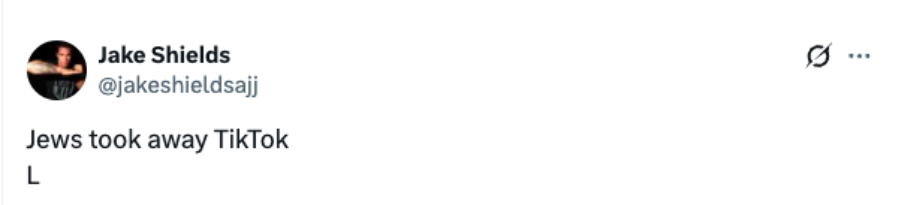
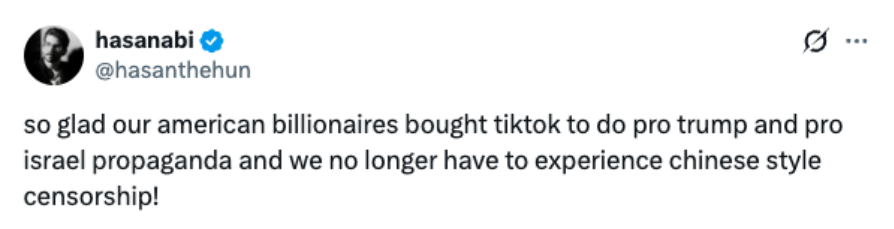
Ellison was often invoked as a villain figure in that story. Accusations that TikTok had become a pro-Israel “propaganda tool” were paired with rhetoric about “Zionist influence”—language implying that the TikTok deal was driven by a desire to protect Israel’s, and Jews’, image on social media. The framing intensified after TikTok’s new CEO, Adam Presser, speaking at an event organized by the World Jewish Congress, said the platform would treat Zionism as a protected characteristic and would classify “Zionist” as hate speech when it is used as a derogatory slur. Following on the footsteps of other mainstream social media platforms. The announcement became a flashpoint in online debate and was repeatedly cited to justify claims that “Zionists” were policing speech. In our social media monitoring, we observed more than 337,000 posts on this topic since January 22, 2026.
Against that backdrop, UpScrolled was repeatedly promoted as the escape hatch—marketed as a place with “no censorship” and “no shadowbanning,” and framed as a way to bypass supposed Jewish or “Zionist” gatekeepers. UpScrolled is presented as a refuge from “Jewish” or “Zionist-controlled” narratives and as a home for people who believe they’ve been politically silenced elsewhere.
Since January 22, UpScrolled has been mentioned more than 387,000 times across mainstream social media platforms; 152,000 of those posts were captured by BSA’s Command Center query tracking discussion related to Jews, antisemitism, or Israel. Strikingly, more than one out of every three posts about UpScrolled is tied to those themes. As UpScrolled becomes a recognizable name, its public identity is forming rapidly around conflict narratives and antisemitic framing.
The amplifiers driving migration
One of the most prominent accounts promoting the platform is anti-Israel personality Guy Christensen, who posted about UpScrolled more than 600 times since January 22. Sustained, repetitive promotion signals an intentional migration campaign––it maintains visibility, provides ideological justification for the switch, and establishes the platform as a political hub rather than just another social media platform.
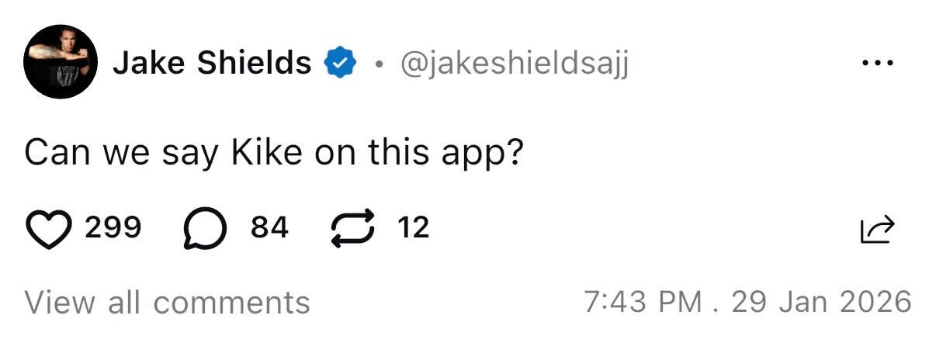
This migration cycle is notable for the unusual characteristics of its promoters. UpScrolled isn’t only gaining traction through anti-Israel activists–it’s also being championed by overt antisemites and extremist figures with documented histories of hate speech. Well-known antisemitic personalities such as Stew Peters, Jake Shields, and Sam Parker have urged their followers to join, alongside white supremacist groups such as “White Lives Matter.”
The platform’s own rules—and what appears on the platform
Despite positioning itself as a free speech, no-censorship platform, UpScrolled’s published policies state that the platform prohibits hate speech and harassment, including attacks based on protected characteristics such as religion. The rules also prohibit support for terrorists or violent groups. In other words: on paper, the platform says it does not allow the kinds of content that are now central to its public reputation.
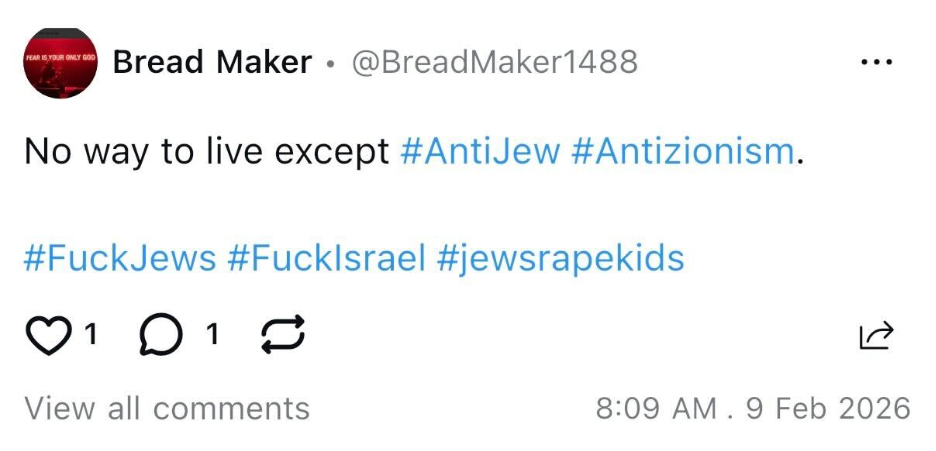
Example posts found on UpScrolled
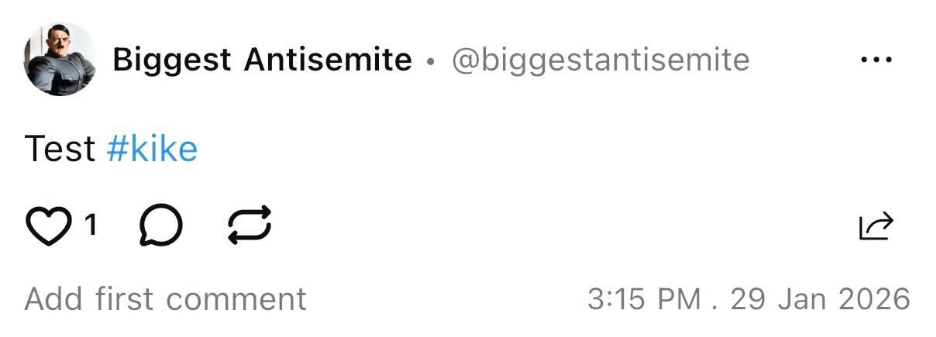
1488 is a known antisemitic dog whistle combining “14” as a shorthand for the “14 words” slogan, and “88” standing for “Heil Hitler.”
According to the policy on their website, UpScrolled forbids attacks based on protected traits, but it does not explicitly address “Zionists” as a proxy category. That creates a predictable enforcement gray zone: content that is functionally antisemitic but phrased as “anti-Zionist” may be treated as political speech unless they operationalize it. Based on the policy, the table below explores what would be and would not be admissible on the platform.
| Content type | Does policy clearly prohibit it? |
| Explicit anti-Jewish slurs / “F— the Jews” | Yes (Harassment & Hate / religion) |
| Holocaust denial / praise | Yes, if framed as hate/harassment |
| “Zionists control media/banks” conspiracies | Ambiguous (may be treated as political speech) |
| Calls for violence vs Jews/Israelis | Yes (Violence / threats) |
| Praise for Hamas/other violent orgs | Yes (“support for terrorist/violent groups”) |
| “Israel should be criticized” / mainstream activism | No (allowed speech) |
After using the app briefly, we found posts and hashtags using explicit anti-Jewish slurs, calls to exclude Jews from public life, Holocaust-denial, and content praising Hamas-linked figures––all of which appear to violate the platform’s stated rules
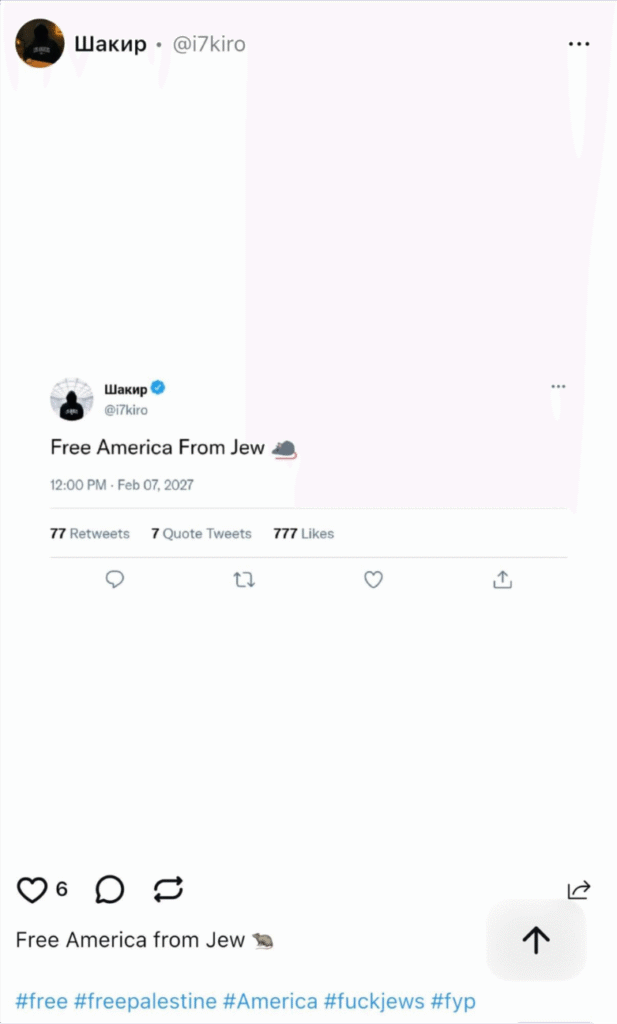
These posts aren’t borderline cases that require extensive world knowledge to comprehend. They are exactly the types of posts the platform’s hate speech and violence policies say are prohibited. Simply put, UpScrolled is failing to adhere to their own rules.
UpScrolled is still new, but the early pattern is already clear: the platform is being marketed as a solution for political suppression, while operating as an on-ramp where anti-Israel grievance and antisemitic conspiracy move together. The result is not just a moderation problem contained inside one app—it’s a cross-platform migration campaign that helps repackage old hate in the language of “free speech” and “uncensored truth.” Whether UpScrolled becomes a mainstream alternative or a durable extremist hub will hinge on what it does next: enforce its own standards consistently and visibly, or continue allowing prohibited content to set the tone for who joins, who stays, and what becomes normalized.



Command Center Insights
How the Internet Reacted to the Cost of Jewish Security