
A series of devastating wildfires broke out in Argentina’s Patagonia region on January 5, scorching tens of thousands of acres of forested land. While most of the fires have remained within Argentina’s borders, the environmental impact has extended across the region, threatening wildlife, air quality, and local communities.
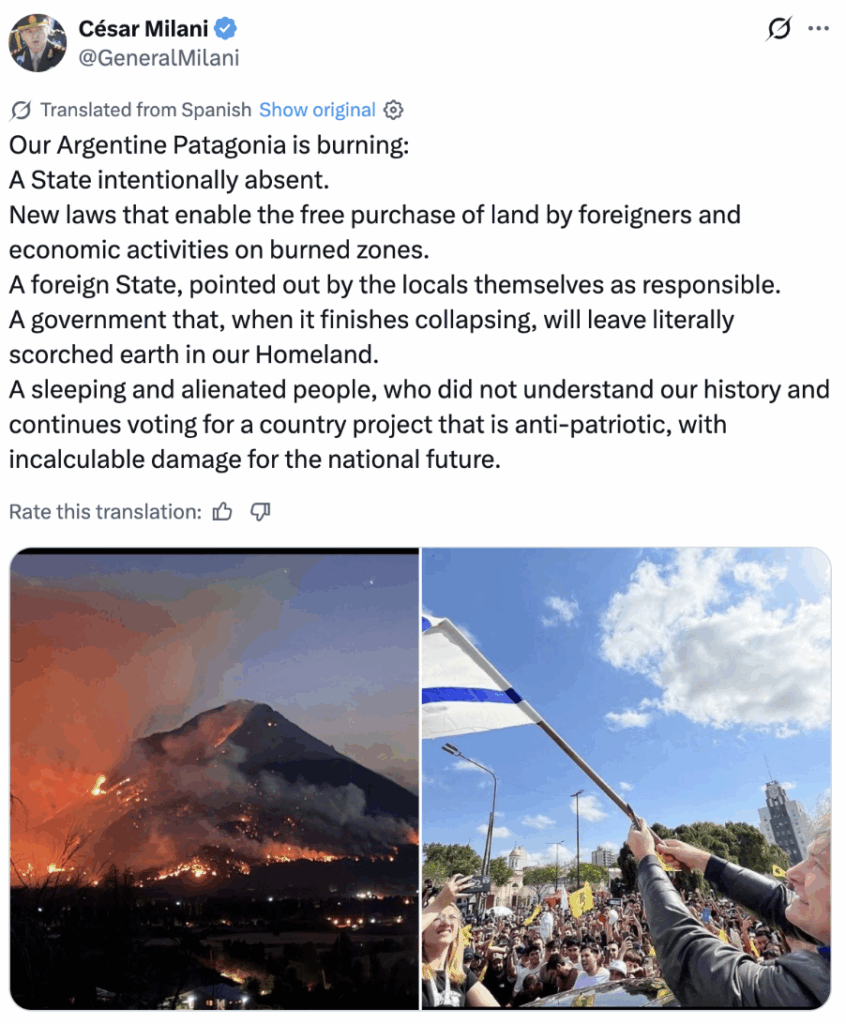
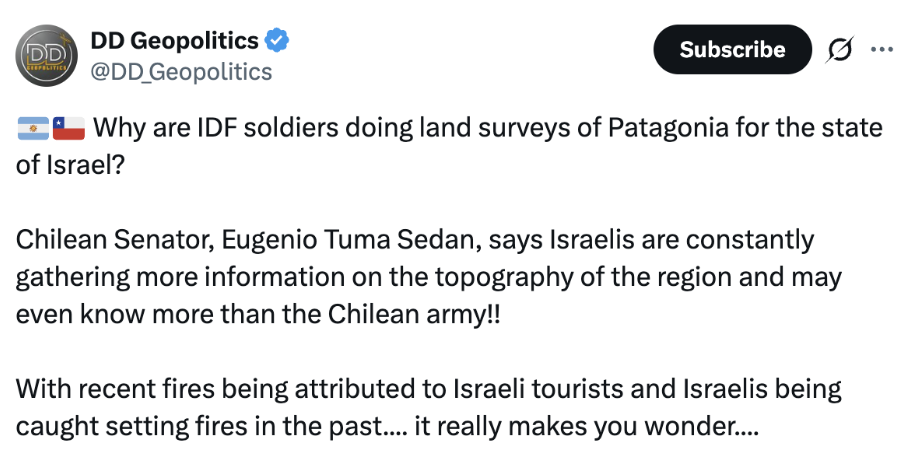
As firefighters worked to contain the blazes, speculation, including antisemitic conspiracy theories, regarding the fires’ origins began circulating online and in political discourse. Argentina’s former army chief, Ceasar Milani, has been one of the most prominent voices suggesting, without evidence, that the fires were deliberately set by Israeli tourists acting on behalf of the state. Rather than stating this directly, he posted that a “foreign State” was responsible and shared an image of President Javier Milei overlaid with an Israeli flag, implying Israeli involvement. Opposition leader Luis D’Elia further exacerbated the claim, saying that “the Israelis are burning Patagonia.” D’Elia has previously faced accusations of obstructing investigations relating to the 1994 AMIA bombing which murdered 85 Jewish people at a Jewish community center in Buenos Aires. This conspiracy has also spread to neighboring nations, with Chilean Senator Eugenio Sedan inquiring why the IDF is allegedly doing land surveys of Patagonia.
Supporters of this narrative have pointed to a 2011 brush fire in Chile’s Torres del Paine region caused by a tourist. However, there is no evidence linking that incident to the current fires, nor has any proof emerged identifying Israeli tourists—or any specific group—as responsible. Some supporters of the conspiracy advance explicitly antisemitic claims, gaining hundreds of thousands of views on posts alleging that the government is “selling Patagonia to the Jews” or is “letting Patagonia burn so Israeli’s can buy the land cheaply.” This theory is closely tied to antisemitic themes of greed and control, believing that the Argentinian government is prostrating for the Jews and allowing them to take over the Patagonia. While some of these posts actively promote the conspiracy, others challenge it, criticizing the lack of evidence and warning against scapegoating. Several journalists have also issued corrections or walked back early claims regarding the identity of those responsible for starting the fires.
When analyzing data on the spread of this conspiracy, we focused on monitoring data in English, which only captures part of the conversation due to much of the discourse occurring in Spanish-language media. Despite this, our monitoring of English language posts has identified more than 270,000 posts referencing both “Patagonia” and either “Israel” or “Jews.”
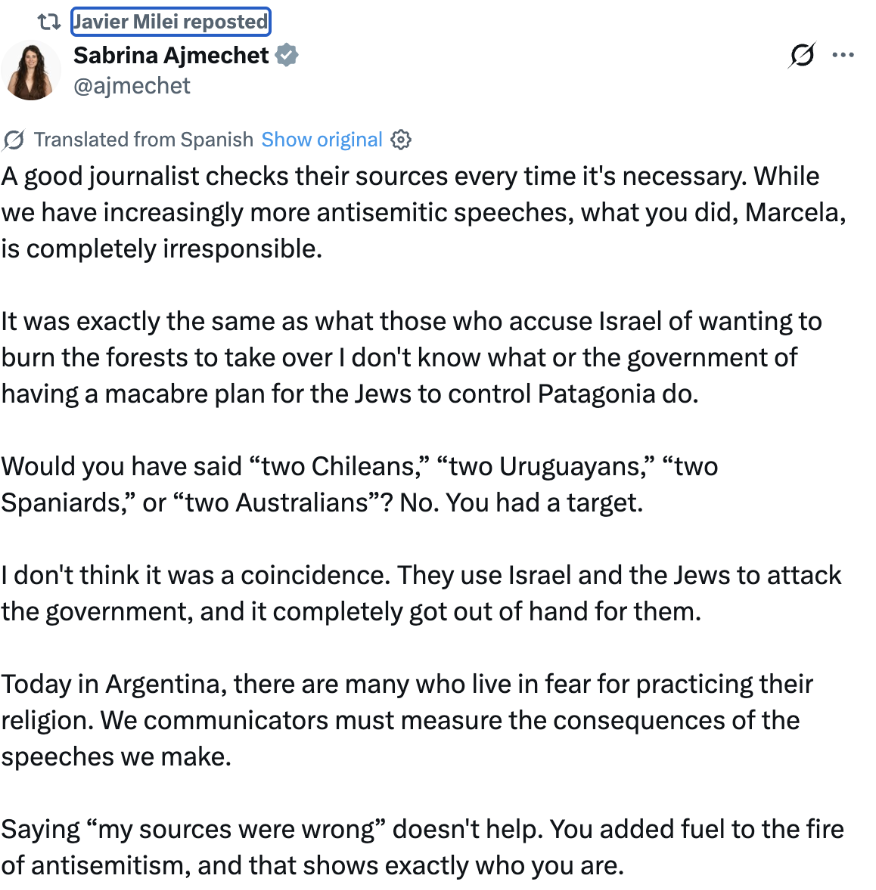
Local community members and civil society voices have expressed concern that rushing to assign blame—particularly along ethnic or religious lines—risks legitimizing antisemitic rhetoric and emboldening individuals with a history of violence against Jews. Without any verified information, these narratives divert attention from emergency response efforts and the broader environmental factors that often contribute to wildfires, such as drought, extreme heat, and land or financial mismanagement. Even President Milei has taken to social media and reposted several posts calling out conspiracy theories, demonstrating his resolve to stand up against Antisemitism that spreads from speculation.
As investigations into the cause of the Patagonia fires continue, the situation highlights how quickly natural disasters can be exploited to spread disinformation and hate. Responsible reporting and public restraint remain critical to preventing further harm.



Command Center Insights
How the Internet Reacted to the Cost of Jewish Security